“You should just be a normal boy. Why can’t you be a normal boy,” Julie said, repeating the words a school aide yelled at her son. Julie cried uncontrollably as she described their experience at a school in Texas. Her son Alex, a ninth-grade student who loved playing with Pokémon cards, had been diagnosed with autism and oppositional defiant disorder. Like any parent, Julie sent Alex to school with the belief that teachers would help him gain valuable skills and provide access to important opportunities. Instead, a teaching assistant disregarded Alex’s diagnoses and pinned him down with his face pressed against the ground. School staff also placed Alex in a small, locked room countless times a day, which pushed him to run away from school on several occasions. The U.S. Department of Education describes these tactics as restraint and seclusion respectively.
When Julie confronted the staff at Alex’s school, the teaching assistant made a chilling statement that echoed in Julie’s mind. Julie cleared her voice, erased all the emotion from her face, and imitated the teaching assistant’s coldhearted demeanor as she recited the declaration. “We see our students going into the world and accomplishing great things. But it doesn’t seem like your son will be able to do that.” I wondered what the teaching assistant’s comments signified about the school environment for families of children with disabilities, and how it affected Julie, Alex, and their family. My research focuses on the experiences of families like Julie and Alex as they navigate schools that use restraint and seclusion in ways that harm children with disabilities.
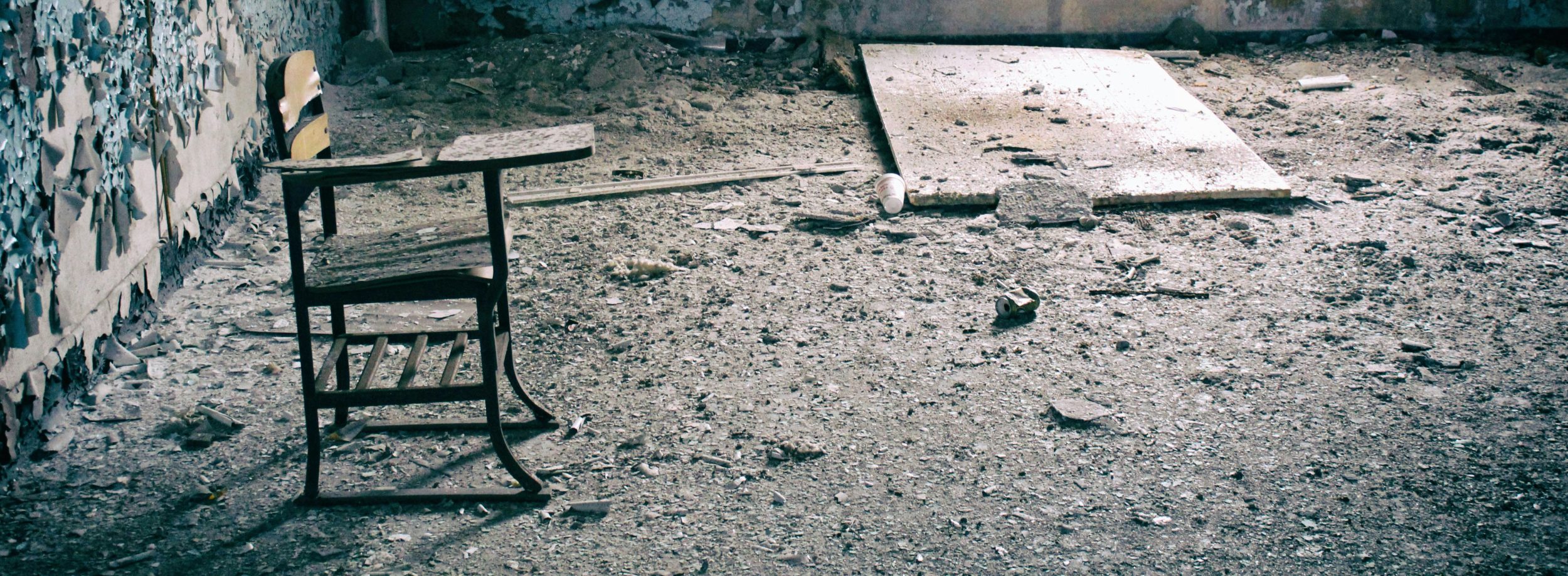
When many of the parents I interviewed watched their child leave for school in the morning, they assumed their child would be in class learning throughout the day. Instead, they were—as one child told his mom—serving time in a seclusion room. Consider how a child interprets “serving time”—not inside a prison or jail, but a public school. Visualize being a child who is locked inside a small room—usually the size of your bathroom. You push the door with all your strength and kick it repeatedly. The door will not open.
More from our decarceral brainstorm
Inquest—finalist for the 2025 National Magazine Award for General Excellence & cited in The Best American Essays 2025—brings you insights from the people working to create a world without mass incarceration.
Sign up for our newsletter to get the latest in your inbox every Saturday.
Newsletter
Now imagine being the parent of that child, who may spend hours confined to a six feet by eight feet space after a single behavioral outburst, without your knowledge. Parents of children diagnosed with cognitive, physical, and behavioral disabilities live this nightmare every day. When I spoke with them, they shared personal details regarding the challenges they faced at home before their child’s diagnosis.
These parents showed a keen understanding and unconditional love for their children. They described their children as kind and playful individuals who needed support and guidance in expressing their emotions. They hoped to see them thrive in school.
But school officials did not convey the same level of care and concern. It seemed that some school officials did not see the whole child—the kind and playful person that parents described. Instead, they fixated on a child’s disability, which they interpreted as a lack of ability—and adequate reason to remove them from the classroom and move them into isolation. The comments and actions taken by teachers and support staff relayed a powerful message to parents: We do not want your child in our school.
This message is not new. Before the passage of the 1975 Education for All Handicapped Children Act, children with disabilities were regularly excluded from public schools, or else lacked consistent access to formal public education. As the Act stated: “[The] educational needs of millions of children with disabilities were not being fully met . . . because the children were excluded entirely from the public school system and from being educated with their peers.” To understand this exclusion, it is important to consider the legal and historical developments that preceded it.
One pivotal turning point came with the Supreme Court’s decision in Brown v. Board (1954), which declared racial segregation in public schools unconstitutional. Following the decision, activists argued that exclusion based on disability status should also be illegal. They argued that disability was a naturally occurring phenomenon in society and should not serve as a barrier to obtaining full access to any social institution. Drawing on the arguments made in the Brown decision, attorneys challenged the exclusion of children with disabilities in PARC v. Commonwealth of Pennsylvania (1971) and Mills v. Board of Education of District of Columbia (1972). In both cases, rulings held that students with disabilities were entitled to an education and paved the way for the Education for All Handicapped Children Act of 1975, which was renamed the Individuals with Disabilities Education Act (IDEA) in 1990.
While the act expanded access to education, it also institutionalized separate special education placements that could limit full inclusion. During the 1970s, school officials frequently placed students with disabilities in separate special education classes. They justified this form of social exclusion by suggesting that students with special needs would disrupt the learning of students without disabilities if they were educated in the same classrooms. They also drew on a separate logic, arguing that students with disabilities required specialized attention, instruction, and curricula that they could not receive in a general education classroom.
According to the IDEA discipline regulations, “a child with a disability may display disruptive behaviors characteristic of the child’s disability and the child should not be punished for behaviors that are a result of the child’s disability.” Yet when school officials placed them in separate learning environments, researchers documented lower academic achievement, stigmatization, and poorer social outcomes. Despite a shift toward placing students with disabilities in general education classrooms beginning in the 1980s, many of these problems have not been resolved.
When compared to students without disabilities, students with disabilities are twice as likely to be suspended from school, even in some cases as early as preschool. They are nearly three times more likely to be arrested. Although federal guidance today states that restraint and seclusion should be used only as a last resort, Civil Rights Data Collection data from the Office for Civil Rights show that approximately 101,990 students experienced restraint or seclusion in U.S. public schools during the 2017–2018 school year. This gap between policy and practice raises serious concerns about how these practices are used in schools.
The experiences shared by families of children with disabilities make it clear that some schools are anti-disability institutions. I define “anti-disability” as the systemic devaluation, criminalization, and exclusion of individuals with disabilities in mainstream society. Though the term “ableism” has been used to describe the discriminatory experiences people with disabilities endure, it fails to capture the structural violence and criminalization that is embedded in how some schools work vigorously in opposition to families of children with disabilities, enact harmful practices, and shift resources away from them. Also, “ableism” does not account for how children with disabilities were suddenly entitled to public education in the 1970s following decades of ostracism, nor does it account for the gradual decline of compulsory sterilization practices targeting people with cognitive disabilities in state facilities.
It is important to clarify why characterizing school seclusion as solitary confinement for children should prompt an urgent call to action. Early in my research on seclusion, I assumed children were placed in seclusion rooms for no longer than a few minutes. I was wrong. Parent after parent reported that, in some cases, their child was confined for hours. Some children were placed in seclusion rooms from 8:30 a.m. to 3:00 p.m. for consecutive days because of a single behavioral outburst. We already know the destructive effects of solitary confinement on adults—why should children be any different?
When early observers studied the impact of solitary confinement on adults at Eastern State Penitentiary in Philadelphia more than 200 years ago, they found that long-term isolation did not help most incarcerated people become productive members of society; many experienced severe psychological distress or committed suicide. Solitary confinement, which is in widespread use in U.S. prisons today, continues to adversely affect adults’ mental health. In 2016 the federal government banned the use of solitary confinement for juveniles in federal prisons.
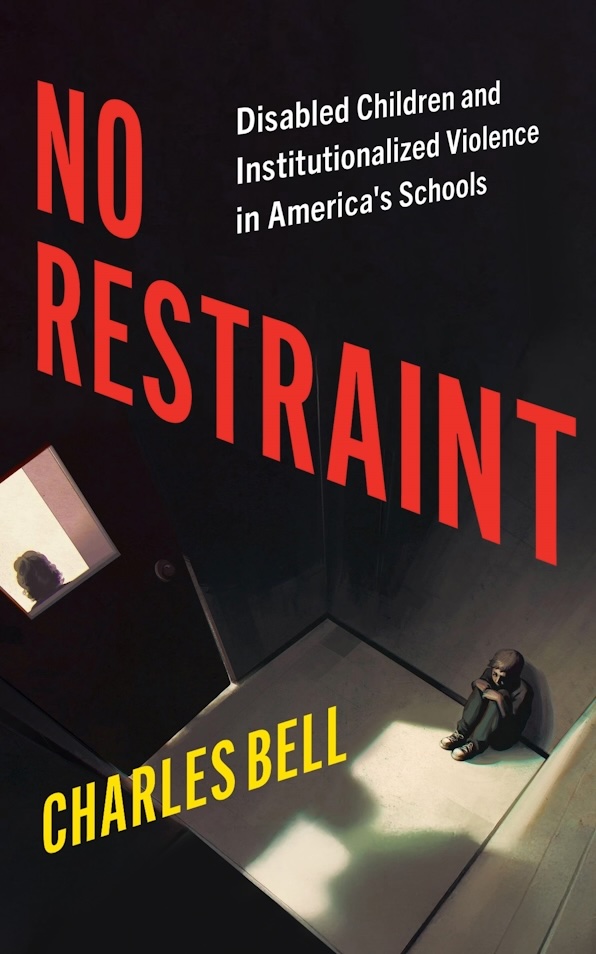
While these policies address incarcerated youth, the children I have been discussing here—and for whom I advocate in my book No Restraint: Disabled Children and Institutionalized Violence in America’s Schools—experience a very different system. They are not incarcerated; they are public school students.
If temporal disorientation and severe isolation adversely affects incarcerated adults, imagine the impact it has on a child. Why are we placing children in seclusion rooms for extensive time periods when we know seclusion can lead to the development of long-term psychological issues?
With all the research, technology, and educational innovations at our disposal, we can develop a better strategy to educate children, minimize behavioral outbursts, and ensure that our learning environment remains safe. Our most vulnerable children depend on the goodwill and intentions of educators, researchers, policymakers, and parents to fix this problem.
Adapted from No Restraint: Disabled Children and Institutionalized Violence in America’s Schools by Charles Bell, reprinted with permission from NYU Press.
Image: Olivia Basile / Unsplash