No one understands prisons better than the intrepid journalists working inside of them to share their lived reality with the broader public. Of the hundreds of essays published at Inquest since 2021, roughly a quarter have been penned by incarcerated authors. Through these voices—and the related advocacy work of the Institute to End Mass Incarceration (IEMI), which publishes Inquest—we have seen up close the barriers prison journalists regularly confront.
In autumn 2025, IEMI launched a new project aimed at identifying promising legal interventions that would improve conditions for prison journalism—with a broader goal of ushering a series of Prison Journalism Bills of Rights into law. Inquestis pairing that advocacy work with this series, Defending Prison Journalism, where incarcerated journalists across the nation, alongside experts and activists working to support them, will share essential insights into the challenges at hand and the path forward.
New content will continue to be added to the series throughout 2026. Subscribe to our newsletter to make sure you don’t miss anything.
Prison Journalism Is a Disinfecting Light. That’s Why Prisons Suppress It.
A new initiative on prison journalism from IEMI aims to restore prison transparency and First Amendment rights for incarcerated journalists.
Andrew Crespo & Premal Dharia
Read More
What Is the Role of the Prison Journalist?
A former editor-in-chief of a prison newspaper examines the responsibility of prison journalists, the constraints they work under, and why reporting from inside matters.
Phillip Vance Smith II
Read More
“I Want to Find the Connectedness in Everyone.”
The nation’s best-known prison journalist discusses his book ‘The Tragedy of True Crime’ and the challenges faced by those who write from inside.
John J. Lennon interviewed by Adam McGee
Read More
“We have journalists every place in the world except in prisons.”
Incarcerated journalist Christopher Blackwell discusses his recent book on solitary confinement, and what it would take to level the playing field for incarcerated writers.
Christopher Blackwell interviewed by Adam McGee
Read More
The Prison Spectacle
Reality TV turns suffering in prison into entertainment—and takes up bandwidth for legitimate prison journalism.
Vidal Guzman
Read More
When Reporting Is a Crime
States have restricted, surveilled, and punished prison journalism for decades, with dire consequences—for incarcerated people and for democracy.
Corinne Shanahan & Andrew Crespo
Read More
A Narrative of Control
Mass incarceration rests on false narratives that carceral institutions themselves control. But some of us are fighting back.
Lyle C. May
Read More
Asymmetrical Partners
Activism must involve incarcerated people—but few outside advocates really understand the dangers and limitations that imprisoned organizers face.
Ivan Kilgore, Paula Lehman-Ewing & Glenn E. Martin
Read More
What’s in a Name?
Being forced by prison authorities to publish anonymously caused me to reflect on the long history of Black authors choosing names in response to state violence.
Alexander Bolling
Read More
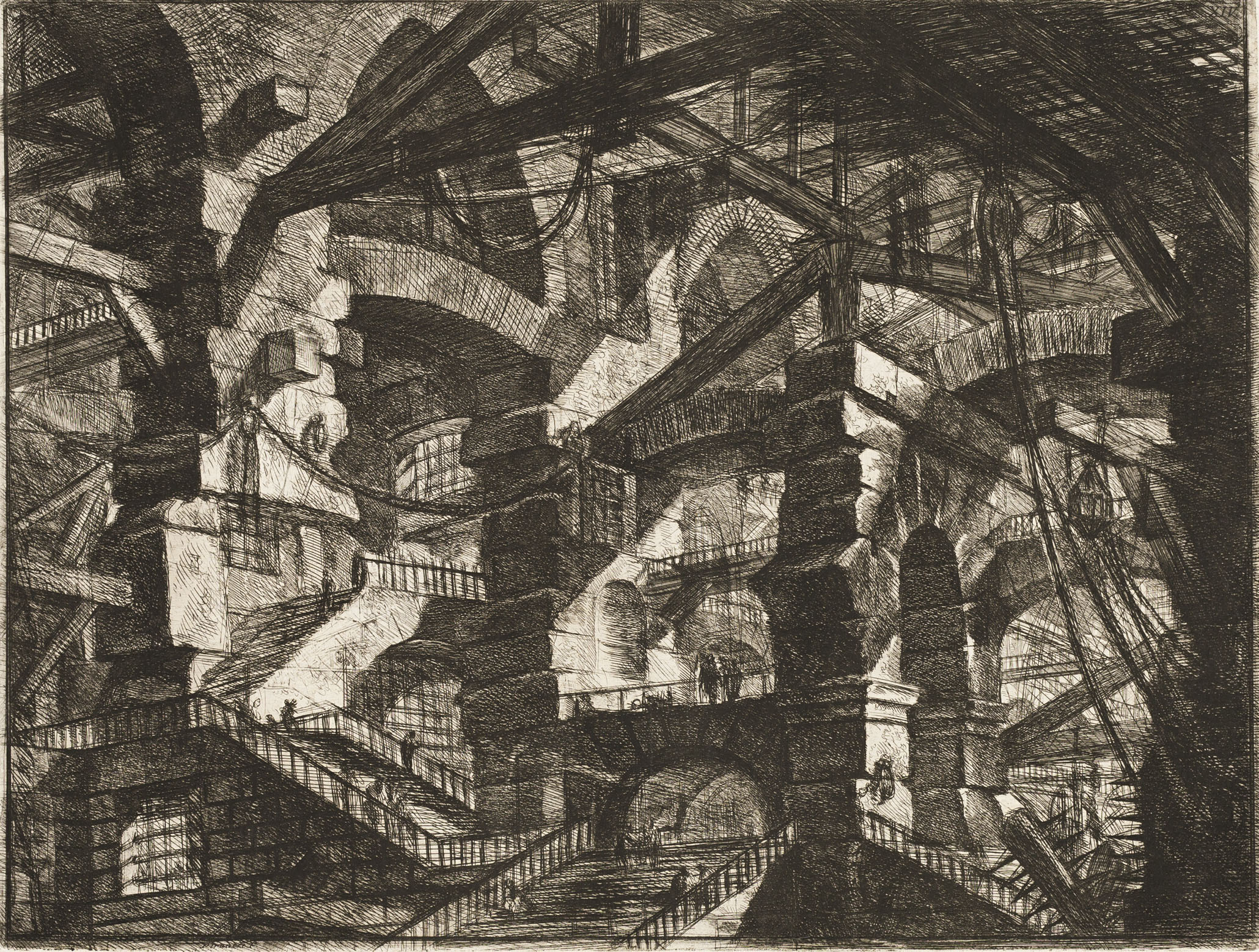
Image: Giovanni Battista Piranesi, “The Gothic Arch,” plate 14 from Imaginary Prisons. Etching and engraving on heavy ivory laid paper, 1761. In the collection of the Art Institute Chicago (public domain)