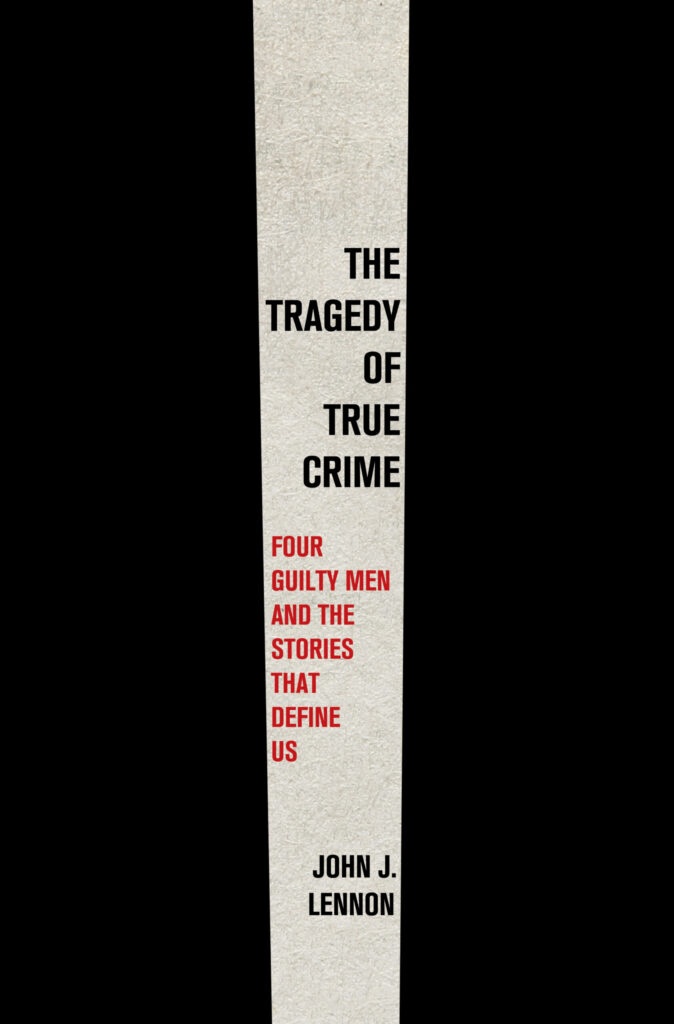
John J. Lennon’s recent book The Tragedy of True Crime traces the lives of three men incarcerated for murder. Drawing on years of reporting from inside, Lennon threads his own story among theirs, challenging how true crime narratives are traditionally told.
In this interview, we talk about why true crime is so popular (even in some cases among incarcerated people), the ethics of telling one’s story, what rights should be guaranteed to incarcerated journalists, and the everyday obstacles faced by professional writers on the inside. During our conversation, some of those obstacles made themselves felt: the session had to be triangulated through Lennon’s publicist, Megan Posco, we navigated strict time restrictions, and frequent background noise occasionally made Lennon’s voice difficult to hear. Lennon talked openly, indeed, about how the noise often leaves him feeling physically wounded and at his wit’s end. These real-time interruptions offered a glimpse of the daily realities that shape Lennon’s writing and perspective.
Adam McGee: You’ve written extensively about how the true crime genre is actually really popular inside, and how you used to watch a lot of it at the beginning of your sentence. I think this is something that will surprise many readers, who probably assume that true crime would be kind of a nonstarter inside of prisons, for all the obvious reasons. Since your book is more broadly about redefining true crime as a genre, I’d love to hear your thoughts: What is the appeal of true crime for people inside? How do they discuss it among themselves?
John J. Lennon: True crime has become much more accessible now—it’s on numerous channels in prison cable TV packages. When I first came to prison, the industry wasn’t so saturated; back then, we had fewer of those shows inside. There were more Law & Order–style programs, which are cop shows but not really true crime. Some guys didn’t like watching those, understandably, given their pasts with the courts or police. When the “dun-dun” of Law & Order came on, you’d hear guys yelling down the tier to turn it off.
Personally, I watched them through a storyteller’s lens. I recently critiqued Law & Order producer Dick Wolf—not for his fictional shows, but for his recent expansion into true crime. I think there’s more at stake when you’re dealing with stories about actual crimes and real people serving time who could turn on the TV and see their own crimes dramatized.
Some cop shows, like Cops, became targets for reform advocates in the 2010s for that reason. A lot of guys didn’t care for them. I’m not entirely against those shows, but they don’t do much good, and many in prison don’t appreciate them.
Nowadays, there’s so much true crime on TV it’s practically unavoidable.
AM: Right, it seems like about 75 percent of what’s on TV these days is either true crime or law enforcement dramas.
JJL: Exactly. That’s Dick Wolf’s bread and butter—FBI, the Chicago series, Law & Order. I’m not mad at the guy for making them, although I do see the sort of propaganda element. He has a model that works, though I don’t think it’s doing as well as it used to, especially with the rise of prestige TV on streaming. Still, he does very well on network TV.
Look, I don’t speak for everyone who’s incarcerated, nor have I done an official poll. But a lot of guys don’t like the cop shows. The larger point I’ve tried to make is that we are just inundated with these shows.
Interestingly, we’re in a moment where more criminal justice reform–oriented shows have started to emerge—like ABC’s For Life (2020) about a jailhouse lawyer. Are they competing with the likes of Law & Order and other shows in the Dick Wolf–style universe? No, but it’s interesting to see different perspectives now, especially on streaming networks.
More from our decarceral brainstorm
Inquest—finalist for the 2025 National Magazine Award for General Excellence & cited in The Best American Essays 2025—brings you insights from the people working to create a world without mass incarceration.
Sign up for our newsletter to get the latest in your inbox every Saturday.
Newsletter
AM: I wanted to ask you about your approach to guilt, crime, and culpability in your writing. There’s a tendency outside prison, especially among people focused on prison abolition and radical criminal legal reform, to treat the “original crime” as something to be left in the past. If at all possible, they never mention it at all, I think often motivated by the laudable aim of not defining people by their past.
You take quite a different approach in your writing. You don’t lead with the crime or foreground it, but you don’t avoid it either. In fact, you often discuss it in detail.
How would you contrast these very different approaches?
JJL: When I make suggestions about how crime should be written about, I’m mostly addressing incarcerated journalists, who have a particular responsibility. If you’re in prison, you’re there, more often than not, because of a conviction. Whether or not you think the outcome was just, if you’re writing journalistic pieces, I think it’s important to level with your reader. Everyone’s case is different, but I advise the writers I mentor to be up-front with readers.
It’s not easy. It’s a complicated situation. But it’s about agency. Prison journalists have exercised their agency in a regrettable way, and now have to reconcile with the reader. Once they do, they can actually gain the reader’s trust.
In my book, The Tragedy of True Crime, I avoid the typical true crime structure in which the narrative leads with the crime. I introduce my protagonists and their backstories first, then return to the crimes later. I don’t shy away from the crimes, including my own; in fact, I hold myself more responsible than the three men I write about. Sometimes, I deliberately push myself beneath my subjects to create empathy. When I say Shane wasn’t a criminal like me, that’s a good thing. You kind of feel for him more.
If we take on the same style as journalists on the outside, it would be a misstep—we don’t have the same agency. At the same time, our own culpability, if we are accountable, can serve as a powerful literary device. We can really do a lot with it.
But it’s also a question of knowing your audience, too. When I pitched my book, I said I wanted to reach both the criminal justice field and the true crime audience, to offer something new no one else could. I’m intentional about trying to reach the broadest audience, not just those already invested in prison reform.
Sometimes movement or activist journalism limits its own reach. I want to find the connectedness in everyone. I want people from all sides to engage with my work.
AM: There’s a perception among people outside who support prison journalism that prison journalists are like heroic war reporters, risking significant danger to tell the truth. I think this often comes with the assumption that other people in prison must likewise valorize the work of prison journalists. But your book points out that prison journalists aren’t always beloved by people inside—sometimes they’re seen as busybodies, breaking the unwritten rules of prison life. There seems to be a kind of two-front battle, then: fighting for legal rights as journalists, but also convincing other incarcerated people of the value of prison journalism. Can you talk a bit about that?
JJL: The identity of the prison journalist is much more well-known today than when I started this work. I published my first piece in 2013. A few years later, after I published more clips, I told fellow prisoners at Sing Sing that I was a prison journalist. They didn’t really understand what that meant. That’s changed with initiatives like The Marshall Project’s Life Inside section and the Prison Journalism Project, helping more incarcerated writers get published.
Still, from my experience, when guys saw my work in mainstream publications, they’d have opinions—why did I write about certain things, why did I say this or that? Sometimes, people thought I was exposing too much, breaking unwritten codes, or even “ratting.” Not all the responses were negative, but that’s the feedback you remember, like the negative book review that sticks more than all the positive ones.
Prison journalism exists within the prison subculture—unlike other journalists, I can’t just parachute in, do interviews, then go home. I live here with my subjects. So you have your fans and your critics.
AM: The author’s note at the back of your book really moved me. It details the daily obstacles that you face as a professional writer in prison. Inquest’s publisher, the Institute of Mass Incarceration, is currently working on model legislation for an incarcerated journalist’s Bill of Rights, in partnership with the impact campaign of The Alabama Solution. It will likely prioritize restoring First Amendment rights, ensuring mail and correspondence access, and guarantees of safety for journalists.
We’d love to hear your thoughts, as a professional journalist functioning at an unusually high level for anybody—let alone a person in prison—what changes would make the biggest difference in your ability to work?
JJL: In a perfect world, I’d love a quiet room to talk to you on the phone, uninterrupted. The noise in prison comes in waves and is incredibly distracting; it really gets to you. I think I’m going to be traumatized by it, and that’s saying a lot—I’ve been stabbed in prison.
If someone’s a bona fide journalist inside, they need a quiet room and access to contacts and colleagues on the outside. But the system isn’t set up to see anyone inside as a real journalist—the rules only recognize outside journalists.
Little things would help: paper and pen, a chair in your cell. For example, right now I’m writing a bicentennial piece on Sing Sing for the New York Review of Books, and as I look at archival photos of the cells from the 1800s, I see they had access to chairs, typewriters, workspaces. Today, I have to stack up books and clothes to support my back just to work; there’s no chair. Small things like a chair would make a real difference.
It’s difficult to grapple with a complex news story, then get thrown back into the chaos of prison life, with its constant interruptions and noise. It’s tough to make that mental transition. But that’s also what makes the work special—it’s about finding a way to do it, despite all that. No Bill of Rights can ever fully insulate you from the disruptions. You can’t control the most offensive parts of prison. And that’s part of the punishment. It’s the unruly noise. It’s the insanity of this place.
Doing the work in spite of it—that’s what prison journalism is all about. It’s pivoting, it’s bobbing, it’s weaving—that’s all this work is. That’s what my job is, at least.
The Alabama Solution is a good example of the complications and risks involved for some. The whistleblowers featured in the documentary may face serious consequences for sharing footage secretly recorded on contraband cellphones. After all, it’s kind of absurd to expect an institution built on secrecy to voluntarily offer that kind of access.
My own approach is different—I work within the system, using my reporting skills through legitimate channels. That’s not a criticism of those who take other risks; it’s just a different approach. But the larger question is about narrative. It’s about incarcerated people owning our own narratives, understanding how to tell others’ stories, and wresting them from the hands of folks who think they’re entitled to them.
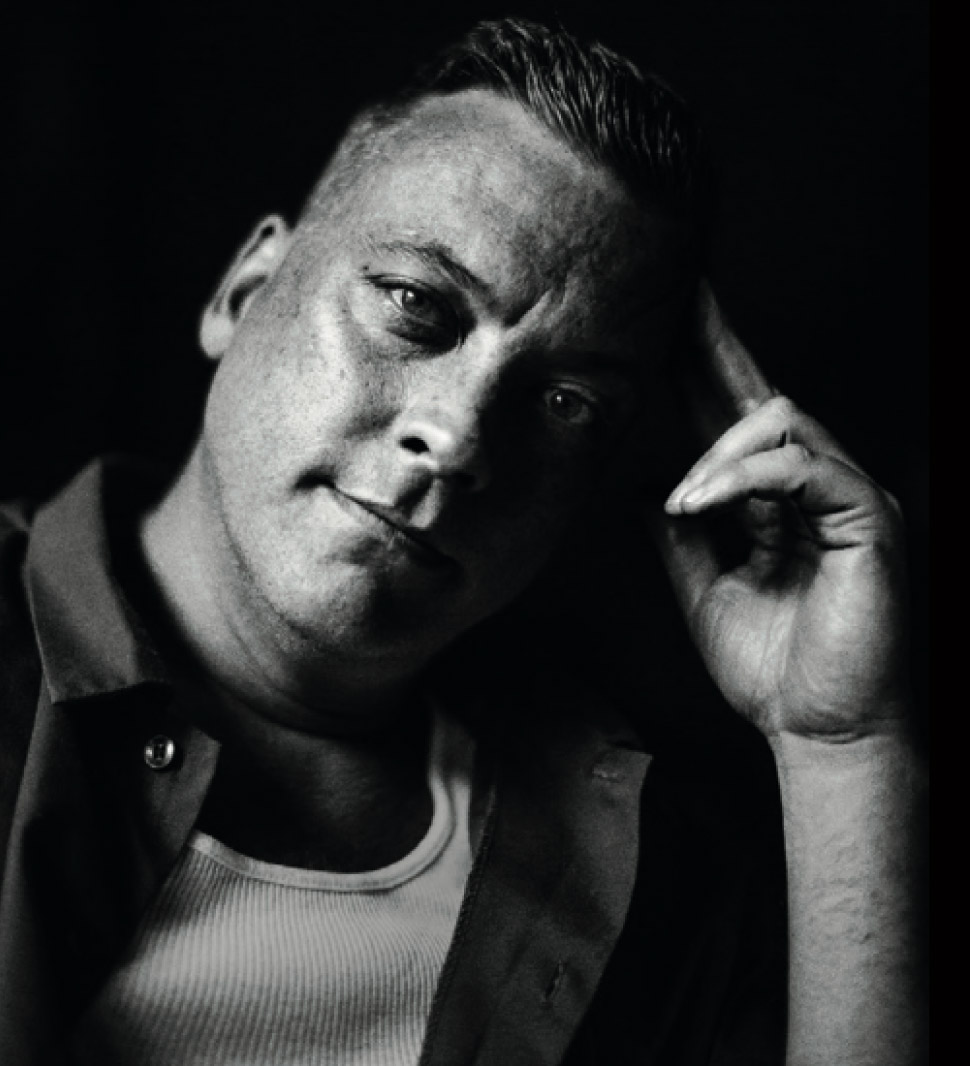
Image: Headshot of John J. Lennon, photo courtesy of the author
Contributors