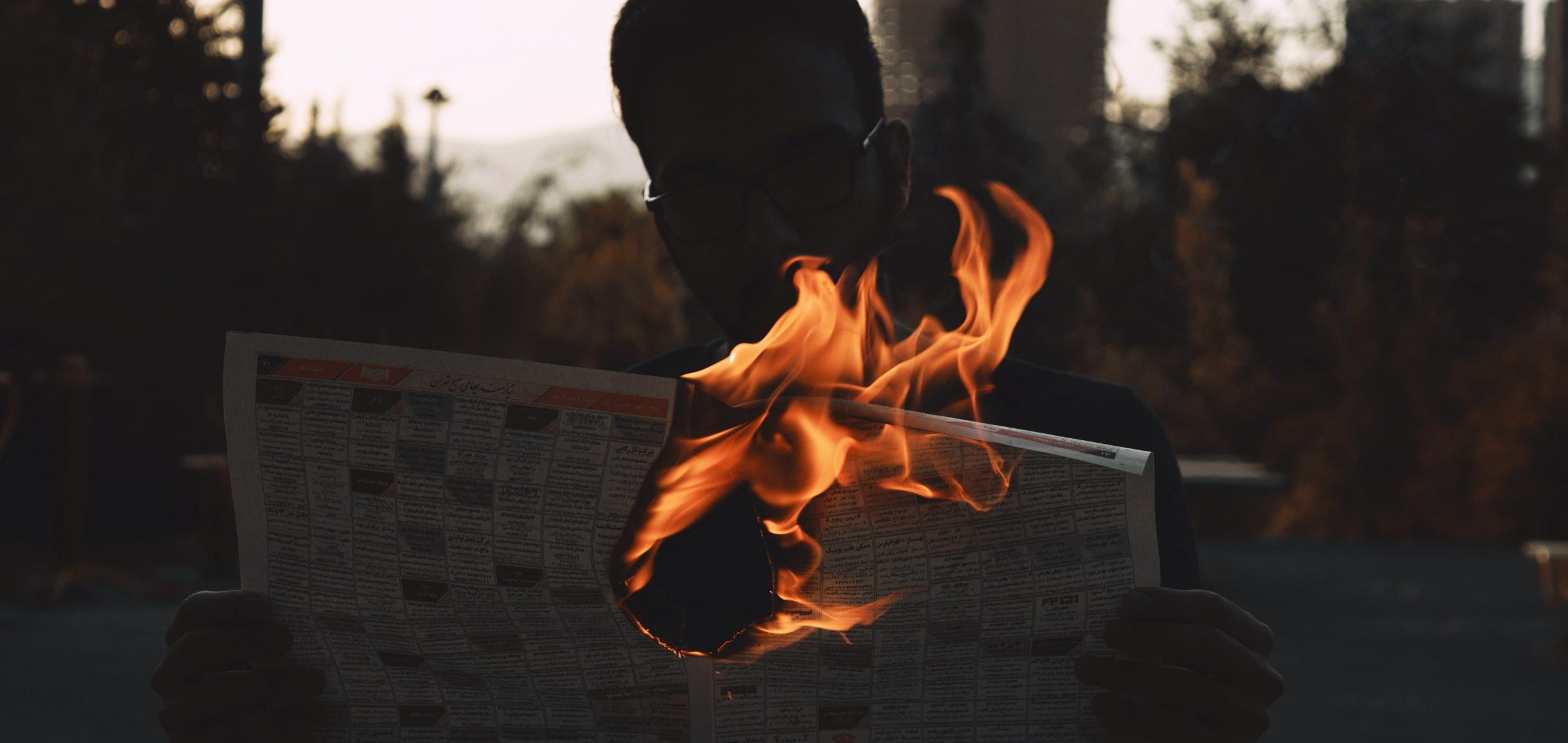
I have spent more than two decades in a cell, which means that my voice travels much further than my body is allowed to go. I write news articles, record interviews with media outlets, and promote my nonprofit, which aims to expand access to educational programs in underserved communities. As I pursue my journalism and advocacy work, I am constantly reminded of a bitter truth: the First Amendment supports incarcerated people more in theory than in reality.
A sweeping body of laws and practices—including Son of Sam statutes, byline bans, mail censorship regulations, and broad judicial deference—regularly suppresses incarcerated voices. My experiences as a whistleblower have placed me squarely within this framework of suppression.
When I spoke with Vice News in 2020, exposing dangerous COVID-19 conditions inside CSP–Solano using footage I captured on a contraband cellphone, administrators retaliated harshly. After the video went viral, administrators removed privileges from the entire population, blaming me; attempted to transfer me to another prison; and issued a disciplinary violation tied to my cell phone possession, although they couldn’t find one when they searched my cell.
The law has constructed a regime in which incarcerated journalists like myself are silenced, punished, and disappeared for telling the truth about what happens behind these walls. In what follows, I trace how the law—both on federal and local levels—has enabled this silencing. I ultimately call for stronger First Amendment protections for incarcerated writers and journalists—ones that treat them not as security risks, but as indispensable witnesses to state power.
More from our decarceral brainstorm
Inquest—finalist for the 2025 National Magazine Award for General Excellence & cited in The Best American Essays 2025—brings you insights from the people working to create a world without mass incarceration.
Sign up for our newsletter to get the latest in your inbox every Saturday.
Newsletter
How Son of Sam Laws Limit What Incarcerated People Can Publish
My journey as a journalist began in 2006, when I joined a creative writing class at CSP–Sacramento. The facility then had a reputation as a “SHU kick-out yard”; in other words, it was filled with men whom the system considered irredeemable. Contrary to that reputation—and to the caricatures often advanced by prison administrators—I found myself surrounded by some of the most intelligent, introspective writers I had ever met. Week after week, we shared stories, sharpened our craft, and wrestled with how to narrate the traumas that had shaped our lives.
In the context of a self-contained prison program, our writing was seen as rehabilitative. But a few years after I published my 2013 book Domestic Genocide: The Institutionalization of Society, the facility began to sing a different tune. In 2015 I was placed under investigation for “possible mis-use of a state computer” and found guilty under CDCR 3024(g) of “authoring books that are for sale on the internet for a profit.” In fact, I had used the proceeds from the book to fund my nonprofit, the United Black Family Scholarship Foundation.
CSP–Sacramento’s logic can be traced back to Son of Sam laws, which states began passing in the late 1970s. Named after the moniker of notorious serial killer David Berkowitz—also known as the “Son of Sam”—the statutes prohibited incarcerated people from profiting from media about their crimes. The Supreme Court struck down New York’s version of the law in 1991, holding that it imposed content-based restrictions on speech. Since the influential ruling, many other states have also invalidated their Son of Sam laws on First Amendment grounds, but dozens remain on the books.
Even when state law appears to allow incarcerated journalists to receive compensation from their work, administrative regulations and restitution policies can effectively nullify those rights. These dual factors—limited constitutional protection and harsh administrative regulation—define the reality in which incarcerated journalists operate. For example, while California’s Supreme Court struck down its Son of Sam law in 2002, it can still restrict compensation for incarcerated writers under administrative regulations governing business activity, and any funds received may also be subject to automatic deductions for court-ordered obligations.
And according to a 2023 report by the Prison Policy Initiate, even when incarcerated people try to produce journalism for free, vague restrictions on “business activities” can still threaten their work with media outlets. These restrictions help ensure that prisoner expression remains controlled, unpaid, and unthreatening to authority.
How U.S. Courts Made It Easier to Silence People Behind Bars
In 1974 the Supreme Court ushered in a new era of restrictions on prison expression, primarily grounded in security concerns. The doctrinal foundation for modern prison censorship was laid in Procunier v. Martinez, where the Court held that restrictions on prisoner mail are constitutional if they further an important or substantial government interest unrelated to suppressing expression, and if those restrictions are no greater than necessary to protect that interest. That same year, the Court extended those principles to the press in Pell v. Procunier, which held that prison officials could restrict face-to-face media interviews with individual prisoners so long as the limitations were reasonably linked to legitimate penological objectives. Pell built upon the framework set out in Martinez, reinforcing the Court’s growing deference to prison officials’ discretion in matters of inmate expression.
The true watershed, however, came with Turner v. Safley in 1987, which replaced the more searching scrutiny of Martinez with a formally deferential standard. Under Turner, a prison regulation that impinges on inmates’ constitutional rights is valid if it is “reasonably related to legitimate penological interests.” In practice, this effectively created a constitutional black hole for incarcerated speech, allowing censorship based on conjecture, administrative convenience, or generalized security concerns to prevail over individual First Amendment rights.
The Supreme Court’s successive rulings in Martinez, Pell, and Turner paved the way for the sweeping and often vague restrictions on inmate speech and access to media that are common in modern prisons.
The expansion of these restrictions on the state level is perhaps most visible in Martin v. Rison, in which the California Supreme Court in 1990 upheld a ban on prisoner interviews with the press. They cited a variety of rationales: speech could undermine security, elevate the inmate’s status (“big wheel syndrome”), create resentment among prisoners, encourage manipulation, burden staff, distract from rehabilitation, distort public perception, and interfere with institutional order. These justifications, broad enough to encompass practically any form of critical communication, effectively gave administrators unchecked authority to silence journalists.
And today, courts routinely uphold bans on publications that supposedly encourage “hatred or contempt of other persons” or “incite disobedience toward prison personnel”—sentiments so broad that virtually any journalism becomes suspect. In the 2011 case Van den Bosch v. Raemisch, the United States Court of Appeals for the Seventh Circuit upheld censorship of writings critical of Wisconsin prison staff, finding that such criticism could undermine security and institutional order, even in the absence of any evidence.
Case in point: on January 15, 2026, our organization was notified that my 2020 memoir, Mayhem, Murder & Magnificence, had been placed on the list of books banned in California prisons, barring incarcerated people in the state from receiving or possessing it. The notice quoted CCR’s Title 15, 3006(c)(1), claiming that portions of the book could “incite murder; arson, riot; or any form of violence or physical harm to any person.”
My memoir—an account of my upbringing on dangerous streets, early drug dealing, incarceration, and my path toward rehabilitation—does no such thing. Notably, many of the flagged pages concern the Black Panther Party, including sections reflecting on what I learned about the party from its incarcerated descendants, as well as a passage on the murder of Black revolutionary Hugo “Yogi” Pinell by white supremacists at New Folsom prison (now called CSP-Sacramento)—a killing I believe was orchestrated.(I am not alone in this belief.)
It is worth noting that not all courts have accepted the logic of Van den Bosch—that generalized assertions of institutional security can alone justify restricting speech critical of prison systems. In the 2007 case Jordan v. Pugh, a Colorado district court held that a federal regulation banning bylines violated the First Amendment and rejected the “big wheel” argument as unsupported and speculative. The court recognized the regulation’s chilling effect on both inmate expression and the media’s right to publish it. That being said, Jordan remains an outlier. Most courts continue to apply Turner with extreme deference.
The Kind of Prison Journalism That Gets to Exist
To understand the stakes of censorship, one must look at the journalism that prison administrators permit. All too often, publications inside function as what B. E. Witkin describes in California Criminal Law as “house organs”—newspapers restricted to presenting the views of the administration. This includes, from what I’ve seen, publications like the San Quentin News, CCWF Paper Trail, and Mule Creek Post. These are important platforms for storytelling and rehab narratives, but they are incomplete. They are largely backward-looking: focused on rehabilitation narratives centered on past harms, contrition, trauma, and individual transformation.
These publications rarely critique the institution in meaningful ways. When they do cover overdoses, staff corruption, brutality, or sexual abuse, they often do so in sanitized, delayed, or heavily moderated ways, and almost never report in real time. They do not make a habit of exposing the “invisible prisons” that scholar Eve Hanan describes—systems of deprivation, violence, and medical neglect that persist precisely because incarcerated voices are excluded from public discourse.
The contrast with forward-looking journalism—journalism that demands transparency, accountability, and systemic reform—is stark. The Alabama Solution, Andrew Jarecki and Charlotte Kaufman’s Oscar-nominated documentary which in part chronicles the Free Alabama Movement (FAM), captures this difference. To create the film footage shot inside Alabama prisons that appears in The Alabama Solution, FAM cofounders Melvin Ray and Robert Earl Council (Kinetic Justice) as well as a number of other men used contraband phones to document guard brutality, slavery-like labor practices, and widespread constitutional violations. Their journalism did not ask, “How do we make amends?” but rather, “How do we expose the system that harms us?”
This is the same tradition I have followed. In 2023 I published a short film on YouTube called “Cell Power,” which argues that incarcerated people face the same dangers as George Floyd, Eric Garner, and Freddie Gray: violence at the hands of law enforcement, often hidden behind institutional walls.
As Stephanie Kane’s 2013 interview with incarcerated journalist Wilbert Rideau shows, this kind of journalism once flourished in U.S. prisons. Under warden C. Paul Phelps, Louisiana State Penitentiary’s the Angolite (called after the prison’s popular name, Angola) became an uncensored publication that exposed corruption, rape, murder, and executions. It won national journalism awards and transformed public understanding of Angola. While the Angolite continues to function as a significant voice for incarcerated individuals, it no longer enjoys the same level of freedom. But such freedom exists only when administrators choose to allow it—something they rarely do today. In recent years, the publication has faced increasing restrictions and censorship, and its ability to report without fear of reprisal has been severely curtailed.
Around the country, prison journalism is in danger. Today, only 21 prison newspapers remain—down from more than 250 in the heyday of prison publications. That the landscape is significantly more suppressive than it was seventy-five years ago is not coincidental. It mirrors the broader suppression of incarcerated voices facilitated by decades of restrictive legal rulings, administrative controls, and punitive practices.
Why Collective Protest Is Treated as a Threat
The Supreme Court has not merely limited incarcerated speech; it has also sharply curtailed the right of prisoners to have political lives. In Jones v. North Carolina Prisoners’ Labor Union, the Court upheld sweeping prohibitions on prisoner union meetings, solicitation of membership, and collective advocacy, reasoning that even peaceful association among prisoners could threaten institutional order. The 1977 decision marked a constitutional turning point: collective political activity inside prison walls became presumptively dangerous, allowing administrators to suppress organizing before any misconduct occurred.
The consequences of Jones continue to structure modern prison activism. When incarcerated organizers attempt collective protest, authorities routinely characterize communication itself as conspiracy or incitement rather than protected political expression. Yet the persistence of coordinated prisoner movements demonstrates the limits of that doctrine.
Around 2013, Ray and Council from The Alabama Solution, working in collaboration with outside supporters and allied incarcerated organizers, developed a coordinated strategy that culminated in the 2016 national prison strikes. Using contraband cell phones, recorded interviews, podcasts, and social media distribution networks, organizers documented unconstitutional living conditions, forced labor practices, and systemic abuse. These communications enabled prisoners across dozens of facilities and multiple states to engage in synchronized work stoppages and protests on September 9, 2016—the anniversary of the Attica uprising—and were widely described as the largest prison strike in recent U.S. history. The organizing process, and the aftermath of the strike, was chronicled in The Alabama Solution.
Under the logic of Jones, such coordination would be treated as a security threat rather than democratic participation. The result is a constitutional paradox: the more prisoners collectively attempt to petition for redress of grievances, the more their activity becomes evidence justifying further repression.
When Speaking Up Can Cost You Your Freedom
Not only does the law restrict the free expression of incarcerated journalists through censorship and administrative controls. It also ensures that any attempt to seek redress for unlawful retaliation is delayed and obstructed. When incarcerated journalists face unlawful retaliation, they are required under the Prison Litigation Reform Act (PLRA) of 1996 to “exhaust administrative remedies” before accessing the courts. But these remedies are controlled by the very officials we report on. As I have written before, administrators treat grievances like toilet paper—tools for wiping away accountability rather than seeking resolution.
The PLRA’s “three strikes” rule further punishes those who attempt to expose wrongdoing by labeling them vexatious litigants if they file multiple complaints deemed “frivolous.” Courts rarely acknowledge that incarcerated individuals—most without legal education—are likely to make procedural mistakes. Instead, they interpret any unsuccessful filing as evidence of manipulation or as a waste of resources.
The consequences extend to parole boards. Many commissioners are former correctional administrators who interpret grievances as a refusal to “accept responsibility” or an attempt to “manipulate the system.” I have met countless individuals denied parole because they dared to assert their constitutional right to seek redress. The message is clear: if you speak, you will pay. Retaliation—or the threat of retaliation—is itself enough to stifle free speech behind bars.
The First Amendment Shouldn’t Stop at the Prison Gate
The silencing of incarcerated writers is not an accident—it is the logical outcome of overlapping systems that all too often treat transparency as a threat and incarcerated people as lesser, undeserving of fundamental rights. The doctrines and practices discussed above—Son of Sam laws, Turner deference, censorship regulations, byline bans, grievance requirements—form a lattice of repression that ensures our stories remain hidden. As legal scholar Andrea Armstrong warns, when courts restrict protest and free speech, abuses are foreseen because grievances cannot be documented or exposed. My experience has shown this to be true: at one point, administrative suppression posed a direct threat to my safety, my work, and my life.
Democracy cannot function when entire populations are excluded from public discourse. As Hanan argues, the invisibility of prison suffering is not a byproduct of incarceration but a deliberate feature of it. If the First Amendment means anything, it must mean that truth is not a privilege reserved for the free. It must extend beyond walls, beyond razor wire, beyond bureaucratic machinery designed to silence dissent.
I have survived retaliation, transfers, disciplinary threats, and attempts to incite violence against me. Many others have not. Strengthening First Amendment protections for incarcerated journalists is not merely a legal necessity—it is a moral one. It is the only way to ensure that the stories, wisdom, and warnings of incarcerated people—stories that could prevent future harm, inform policy, and reveal the truth—are not buried with us.
Image: Siyavash Lolo / Unsplash