
Few legacies of the War on Drugs are more enduring than its disproportionate incarceration of Black and Latinx women. The campaign has often been described as a “War on Women”: between 1980 and 2015 alone, the number of incarcerated women increased by nearly eightfold. Today, although only about 5 percent of the world’s female population lives in the United States, the country accounts for more than 30 percent of incarcerated women worldwide.
Despite this stark overrepresentation, research on women’s experiences behind bars has lagged far behind that of men’s. Ethnographic work has offered important glimpses into incarcerated women’s ties to the outside world, but systematic, in-depth studies of their family relationships—including ties to relatives, partners, and fictive kin—remain comparatively limited.
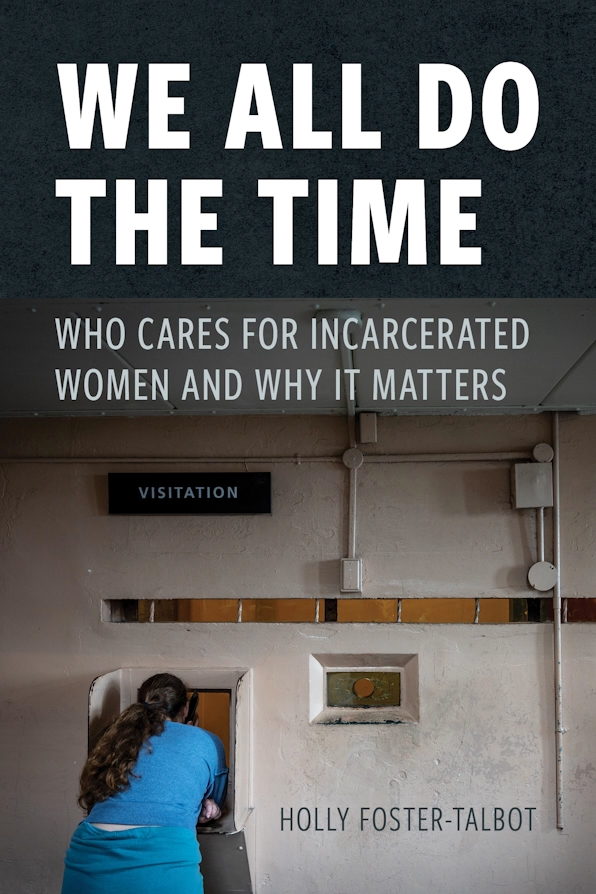
Drawing on research with more than 300 incarcerated women, most of whom were serving sentences for drug offenses, my new book We All Do the Time explores how women’s “linked lives” shape the prison–family experience. Women’s ties to the outside world—and their varying degrees of security or precarity—shape how incarceration is lived on both sides of the prison wall, placing women and their families along a continuum of social exclusion and inclusion. These ties matter profoundly for how incarceration is experienced, and they warrant greater attention and support than they are typically afforded.
One of the women I spoke with, Ana, visibly brightened when the conversation turned to her children. Inside a minimum-security prison in the southern United States, the Latina mother of five spent her time handcrafting personalized backpacks for each child—including a new Spider Man–themed one for her son. At the time of our interview, Ana, who was in her late twenties, was waiting for money to arrive so she could call her children, who were staying with her mother. Even in prison, they remained central to her life. Ana’s story illuminates how the family members of incarcerated women, while often out of sight, are rarely out of mind. Their caretaking roles, in other words, often continue despite incarceration.
My interviews with dozens of women underscore the importance of arts and crafts in sustaining these family ties. Creating and sending handmade items helped women maintain emotional connections to loved ones—no small feat in a context intended for punishment and exclusion. The process also served as a coping mechanism: a way to channel emotion, cultivate purpose, and reinforce positive feelings while they “did time.”
Arts and crafts also served another important purpose: helping women remain physically present in the lives of their children, albeit indirectly. The idea of “presence creation” was introduced to prison studies by scholar Megan Comfort in the context of romantic partnerships. In her work, Comfort describes how incarcerated women sometimes scent letters or objects sent to partners with perfume, treating them as sensory extensions of the body that help sustain intimacy across separation.
More from our decarceral brainstorm
Inquest—finalist for the 2025 National Magazine Award for General Excellence & cited in The Best American Essays 2025—brings you insights from the people working to create a world without mass incarceration.
Sign up for our newsletter to get the latest in your inbox every Saturday.
Newsletter
In the context of motherhood, handmade crafts can similarly function as maternal bodily substitutes, particularly when the items are soft, comforting, and functional. They can be hugged, felt, or worn on the body, much like a mother’s embrace. The women I interviewed repeatedly emphasized this dimension of their work. Thirty-eight-year-old Lara explained that she sent her children arts and crafts to give them something to “touch & feel” in her absence. When they receive her gifts, it is as if they “are holding hands from [city] to [city].” Like Ana, Lara felt it was important that each child had concrete, useful items that they could carry close to them—physical manifestations of her love.
Similarly, fifty-five-year-old Brielle made blankets for her children because of their comforting properties. Thirty-seven-year-old Antonela sent crocheted items—blankets, hats, scarfs, booties, slippers—as well as handpainted ceramics to siblings, nieces, and nephews in order to maintain extended family ties. “I apply my time & love into a craft item and hope that the energy of my love will radiate through their touch of the items I send them,” she said.
Together with Comfort’s research, these accounts further demonstrate how presence creation permeates prison boundaries. For incarcerated women, arts and crafts become a means of mothering and sustaining valued family roles despite physical separation, helping them maintain meaningful connections to the world outside.
Of course, participation in formal creative activities in prison is considered a privilege. Access typically depends on financial resources, is subject to institutional regulation, and may be curtailed at any time by the warden or correctional staff. The availability of art materials also varies significantly across prisons. In my survey, women described relying on lower-cost and more broadly accessible creative practices, including informal activities such as drawing and coloring, although even these require some degree of financial means.
Arbitrary rules further constrain these forms of connection. The prison handbook at the facility where I conducted my interviews specifies that arts and crafts may be sent outside the facility only within thirty days of their creation and only if they are not intended for profit or mass production.
Taken together, these conditions mean that access to arts and crafts as a form of family engagement is uneven and shaped by social class. Many women rely on family and friends for economic support while in prison, including assistance with activity fees and supplies. Some women are unable to engage in these pursuits due to a lack of ties, and others due to a lack of resources. Even within these restrictions, art and crafts provide many incarcerated women with a vital way to create and connect under otherwise bleak circumstances.
Sustained involvement in arts and crafts across the prison–family interface can be significant in reinforcing the relational scaffolding in their lives. These narrative excerpts also underscore the importance of improving access to materials—whether through institutional funding or donated supplies where permitted—so that incarcerated women can more consistently engage in creative activities during their downtime.
In what scholar Candace Kruttschnitt identifies as the “paradox of women’s imprisonment,” although women constitute a minority of those in prison—at about 7 percent compared to men’s 93 percent—their absence may be even more consequential for families and communities. This impact is especially acute in racially and ethnically marginalized communities, given the disproportionate effects of mass incarceration.
For women already in the system, like those I spoke with, the need for immediate attention is urgent. While scholars have highlighted the limits of incarceration and the importance of redirecting resources away from punitive systems, it is also possible to support forms of inclusion that families already sustain informally as longer-term solutions are pursued.
Supporting the families, friends, and volunteers who sustain relationships with incarcerated women is therefore essential. This responsibility should not fall disproportionately on already marginalized communities but should be shared collectively in ways that do not reproduce existing inequalities. Strengthening maternal presence is one way to sustain caregiving relationships that incarceration routinely disrupts.
In this context, understanding the prison–family interface is not only an academic concern but a practical one: reducing social exclusion can help mitigate the mental health consequences of incarceration for women and their families.
Excerpted from We All Do the Time: Who Cares for Incarcerated Women and Why It Matters by Holly Foster-Talbot, reprinted with permission from NYU Press.
Image: Dhaya Eddine Bentaleb / Unsplash