This January, an immigration judge granted asylum to Guan Heng, a Chinese national who risked everything to document Uyghur internment camps in Xinjiang. His covertly filmed footage contributed to Pulitzer Prize–winning journalism that helped expose human rights abuses, but could’ve gotten him tortured or killed had the Trump administration succeeded in deporting him to China. The decision was celebrated as a triumph for human rights and press freedom.
As it should have been. BuzzFeed reporters used Guan’s footage to reveal that the “vocational training centers” Beijing described were actually detention camps where up to a million Uyghurs and other minorities were imprisoned. The first Trump administration’s own State Department determined in early 2021 that crimes against humanity and genocide occurred in Xinjiang. Nobody in their right mind would wag their finger at Guan for violating Chinese censorship laws to expose those horrors. His actions are rightly seen as heroic.
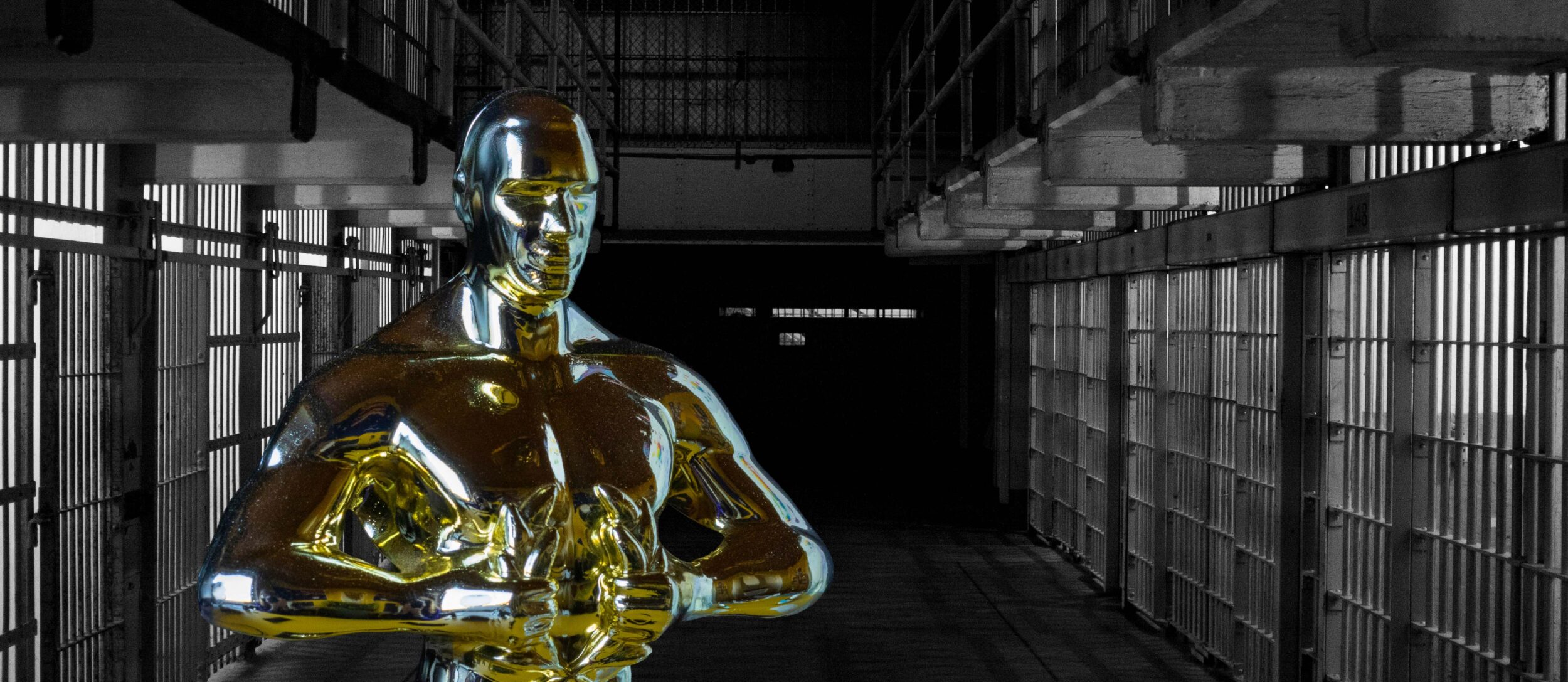
Meanwhile, footage captured by Raoul Poole, Robert Earl Council, and Melvin Ray using contraband cell phones to circumvent prison censorship is the centerpiece of HBO’s The Alabama Solution, which is up for an Oscar for Best Documentary Feature this weekend. The film exposes overcrowding, violence, medical neglect, and suspicious deaths that the Alabama Department of Corrections worked hard to conceal. It shows guards sleeping while on the clock as incarcerated people overdose and pools of blood left in cells after violent assaults. The footage bolstered an ongoing federal investigation of Alabama’s prisons.
But while the Academy of Motion Picture Arts and Sciences deliberated, the three individuals who made the film possible sat in extreme solitary confinement at Alabama’s Kilby Correctional Facility. They were each transferred there in mid-January, without explanation.
Like Guan, Poole, Council, and Ray broke the rules to capture their footage because they had to. Media access to prisons is severely restricted, calls and messages are surveilled, and a federal law called the Prison Litigation Reform Act places never-ending roadblocks between incarcerated plaintiffs and any shot at justice. Even when they can get their stories out, they know that, absent evidence to substantiate their claims, only those already on their side will ever listen, let alone believe them.
But unlike Guan, the system isn’t protecting them from retaliation and torture—which experts tell us is exactly what solitary confinement is. The United States may sometimes protect those who expose tyranny abroad (at least when the tyrants are geopolitical adversaries), but those who shine a light on abuses back home are on their own.
More from our decarceral brainstorm
Inquest—finalist for the 2025 National Magazine Award for General Excellence & cited in The Best American Essays 2025—brings you insights from the people working to create a world without mass incarceration.
Sign up for our newsletter to get the latest in your inbox every Saturday.
Newsletter
The retaliation didn’t start with the film’s release. Council says he was beaten unconscious by correctional officers in 2021, suffering a cracked skull, broken ribs, and permanent vision loss. That attack followed a pattern of retaliation for cofounding the Free Alabama Movement and organizing a 2020 prison work strike. Council told filmmakers he tried to keep people with him at all times and avoided isolated areas. He knew that when it comes to revelations of abuses inside prisons, the system’s response isn’t investigation or reform but rather punishment and censorship. Ray, like Council, has been subject to countless measures of administrative retaliation, including multiple long-term placements in solitary confinement. While Ray was released from solitary in late February, Poule and Council are still trapped in isolation.
They’re not alone. One of us, Jeremy Busby, coauthored this article from a Texas solitary cell. He has detailed the relentless retaliation he’s faced for his journalistic revelations, including his participation in the documentary No Way Out, which aired on an ABC News affiliate in late 2020. Like the contributors to The Alabama Solution, Busby supplied the filmmakers with footage evidencing Texas prison authorities’ horrific mishandling of the COVID-19 pandemic. Like The Alabama Solution, the film and Busby’s efforts led to significant reforms.
So why the disparity between the protection granted to Guan and the punishment leveled against Poole, Council, Ray, and Busby? Is it because Busby and those who captured the footage seen in The Alabama Solution are in prison, and U.S. punitive culture stops us from recognizing their humanity? That may be part of it, but whistleblowers on the outside with squeaky clean criminal records don’t fare much better here.
Edward Snowden’s revelations about NSA surveillance contributed to Pulitzer Prize–winning reporting, too, but he was indicted under the Espionage Act and likely would be in prison for life if he’d remained in the country. Members of Congress consider calling him a traitor to be a litmus test for whether one qualifies for leadership in the intelligence community.
For decades, presidents from both political parties have disparaged and prosecuted whistleblowers who reveal government malfeasance, cheered on by some of the same media outlets that rightly praised Guan’s moral courage and pleaded for compassion for him. The Trump administration claims that even revealing officials’ names and faces constitutes “doxxing” and “violence,” even when those officials shoot people dead in our cities’ streets.
The real reason is that exposing China’s brutality is politically convenient, while exposing the sadistic nature of U.S. prisons forces us to reckon with our own complicity in a system that warehouses almost 2 million people, often in conditions that violate basic human dignity. The same day that Guan won his asylum hearing, it was reported that the rotten food in the ICE detention center where five-year-old Liam Conejo Ramos was held with his father made him violently ill. It’s far from the first time ICE detainees have reported that exact same experience.
Stories about prison conditions—whether abroad or at home—should not be illegal. They should be nurtured and safeguarded, including by law. That requires radical legal change. Only when incarcerated truth-tellers have legally mandated pathways to confidential contact with media, access to tools of the trade, and real protection from retaliation can we begin to confront the kind of carceral violence that feeds rotten meals to a caged child. The Institute to End Mass Incarceration, where one of us works, is currently leading a new project to bring this much-needed change to jurisdictions across the country.
The news from Guan’s case is cause for celebration. But if we were serious about the principles that drove the fight for his asylum, Poole, Council, and Ray would be rewarded for their courage, not tortured by the institution they exposed.
Illustration by Inquest. Source images: Mirko Fabian / Unsplash; Emiliano Bar / Unsplash
Contributors