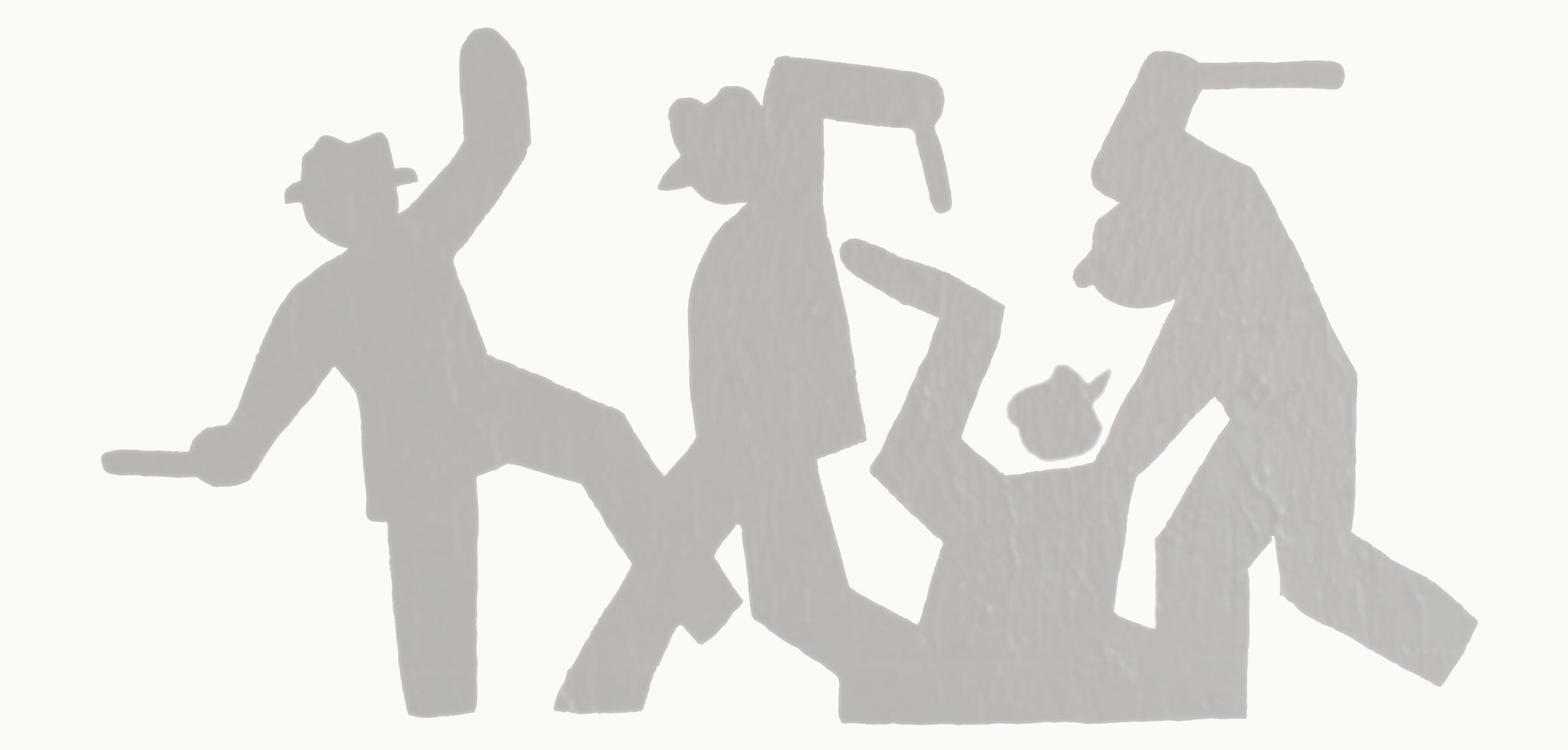
I became a number before I became a man.
I was just twenty-two years old when it happened. The sun wasn’t up yet when a CO’s voice cracked through the heavy metal door like a gunshot. “Giordano! Pack up. Downstate’s here.” His nightstick rattled against the steel bars. I didn’t move at first; I just sat there, numb.
That Thursday morning, in Orange County Jail, I stepped out of boyhood and into something colder and far more permanent. I didn’t know it then, but I would soon receive my new state-issued ID: 17A1451. To the world, that was what I’d become.
For the past two and a half years, I’d seen other men transferred from the county jail in Goshen to Downstate Correctional Facility in Fishkill, New York. I must have watched two dozen men leave to begin their prison sentences. They each left handcuffed and shackled, with their heads down. Some came back with horror stories; others returned bragging, treating the experience like a rite of passage. These were the men who were repeat offenders, already fluent in the system.
I moved slowly, brushing my teeth, washing my face, and packing my few belongings. Half of me hoped that if I stalled long enough, the transfer might not happen, and I might be allowed to stay in the county. But the gate buzzed, the latch snapped, and reality set in.
Honestly, I didn’t know who or what to believe about prison. But I knew one thing for certain: the prison wouldn’t care who I was before I walked through its doors.
It’s been eight years since that morning.
Every day since March 30, 2017—the day I was sentenced to twenty years to life under New York’s felony murder law—I’ve been trying to understand what it means to live inside a system that can so easily diminish your humanity. I’ve been trying to understand what it means to live as a human being inside a place built to trap you in a single story, stuck in time, no matter who you were or who you wanted to become.
I grew up in Orange County, New York. When I was young, I moved around a lot with my mom—Ellenville, Middletown, Goshen—while she tried to find steady work. My dad wasn’t in the picture. I was always smart, but school never held my attention. The material felt distant, and I couldn’t sit still long enough to pretend otherwise. I grew anxious, restless, and frustrated. Teachers often saw me as a problem that had to be dealt with, not a kid struggling to make sense of himself.
At the direction of the school, my parents brought me to a psychiatrist to keep me from being removed from class altogether. They barely asked any questions before handing down a set of diagnoses—attention deficit hyperactivity disorder (ADHD), oppositional defiant disorder (ODD), anxiety, and depression—along with a handful of prescriptions. Looking back, I don’t believe those diagnoses were accurate; they seemed designed to control my behavior rather than understand it. From then on, I wasn’t Devin anymore. I was a set of labels.
More from our decarceral brainstorm
Inquest—finalist for the 2025 National Magazine Award for General Excellence & cited in The Best American Essays 2025—brings you insights from the people working to create a world without mass incarceration.
Sign up for our newsletter to get the latest in your inbox every Saturday.
Newsletter
In my teens, I started looking for ways to escape. Pills became my drug of choice. What began as prescriptions to manage me turned into a dependency I carried on my own. That dependence deepened when I met a young woman who became my girlfriend. We spent most of our time using together, feeding each other’s habits. It was an unhealthy bond, but at the time, it was all I had to hold onto.
In the seventy-two hours leading up to the tragedy, I remember attempting suicide by swallowing a handful of prescription pills. I remember being taken to the hospital and released that same night. On the day of the tragedy, my family and I sought help at two different inpatient rehab programs. I remember both turning me away, claiming my addiction wasn’t severe enough. I was nineteen years old, drowning in addiction. I was desperate for a way out, but it felt like every door I pushed against stayed shut.
That desperation, combined with my struggles, led to a tragedy I will never escape. In the early morning hours of August 2, 2014, I accompanied my girlfriend to the home of an elderly woman. My girlfriend had decided to sneak inside to steal pills and money. Court records show that while she searched, the woman woke up. Panicked and high, my girlfriend attacked and killed her. Later, she admitted what she had done in a written and video-recorded confession.
I tried to stop her before she went inside, but she wouldn’t listen. When I eventually stepped through the door and called out, the woman was already lying in bed, unmoving. I froze. That moment would shape the rest of my life.
During intake in the Orange County Jail, men slumped against the walls. Some snored, some mumbled, others looked dead behind the eyes. I watched them like a boy watches grown men, trying to learn how to hide his fear. Some looked hardened; others looked broken. I tried to look like I didn’t care. This was the section that processed men coming in or going out, whether returning home, transferring to another jurisdiction, or, like me, heading out to state prison.
The roughly forty-five-minute bus ride to Downstate, a maximum-security prison that has since closed, felt like a descent into another world. I stared out the window. The road signs blurred past, counting me down to my new life. One name lodged in my mind: Red Schoolhouse Road. The road’s cracked pavement wound toward what looked like a fortress. Towering stone walls came into view, surrounded by rows of coiled razor wire.
“Everybody off. Single file!” an officer barked.
The orders came quickly, without feeling. The guards’ uniforms were crisper here, and their energy colder. This was no longer the county jail; this was the machine.
“Face the wall. . . . Shirts off. Pants off. Right hand, left shoe. Left hand, right shoe. Socks. Move, ladies!”
There was no eye contact from the officers, just scripted, conveyor-belt commands.
“This isn’t the county or Rikers,” one said, his tone calm and chilling. “You mess up here, you will lose your teeth. You come at one of my officers, we’ll assume you’re trying to cause deadly harm.”
In the intake area, they strip-searched us, shaved our heads, and doused us in some sort of foul-smelling lice shampoo. I’ll never forget that smell. Their hair trimmers buzzed like locusts. A young Latino kid gripped his ponytail like it was all he had left.
“You ain’t cutting shi—” he said.
An officer struck him before he finished the sentence. Another tackled him. Pepper spray filled the air. “Stop resisting!” they yelled, drowning out his screams.
“Get on the wall!” our escort barked.
We scrambled back, silent and shaken. That beating wasn’t just for him—it was for all of us, an introduction to Downstate.
The process continued without pause. We took cold showers and were handed our new clothes: stiff green uniforms, cheap socks, and paper-thin underwear. One by one, we were called up and given our prison IDs. We passed through medical and mental health screenings and were served a meal on a plastic tray—bland and unidentifiable.
At 3 Complex, H Block, men stood up against their cell doors, peering through the long rectangular slots. They watched us roll in—some shouting, others quiet, but all intensely alert.
When my cell door slammed shut, I was finally alone, or as alone as I could be. The cell smelled of mildew and sweat. The mattress sagged over rusted springs. Feces—or something like it—was smeared in the corner. I dropped my few things on the steel desk, lay down on the mattress, and cried.
I cried quietly at first, then harder—my shoulders shaking, my breath ragged. Facing the wall, I cried for my mother. For my younger self. For the boy I’d been and the man I’d never be. Above me, the concrete ceiling stared back, blank and indifferent.
The story told online—the one you’ll find if you Google my name—says I showed no regard for life. That I preyed on an elderly woman. That I walked into a stranger’s home and helped take everything from her, including her life. That story is the only one most people see; and that, more than the razor wire or the sentence itself, is what began to eat at me.
People do not see the hospital bracelet I was wearing at the time of my arrest. They do not feel the pain that led me to attempt suicide days earlier, or understand the mental health crisis I was facing. They do not grasp how drugs can dull your senses and slow your mind, allowing something terrible to unfold nearby before you fully comprehend it. What they don’t see is that I never wanted the tragedy to happen, and that I’ll carry it with me for the rest of my life.
That digital version of me bears little resemblance to the man I was, or the man I’ve spent over a decade becoming. Yet it was the version the world accepted. For years, I believed there was no hope of changing it. The Internet felt permanent, immovable, like concrete poured around my name.
I was incarcerated. How could I tell the world my story? I didn’t even have a cell phone, much less a computer. But a friend reminded me that while I couldn’t undo the past, I could still offer context and truth to the story the world saw.
With help from my loved ones on the outside, I began to create a presence across social media: Instagram, Facebook, and Twitter. I published reflections about my life and prison experience on Substack, AboutMe, and Change.org. I launched a campaign titled “Who Is Devin Giordano?” and invited people who knew me to share their memories.
In 2024 I cofounded the You Are Not Alone Project (YANA), a nonprofit created from behind prison walls. Its mission was simple but urgent: to shift the culture of how men treat women by confronting violence, teaching respect, and supporting healing—one man at a time.
The project started in the visiting room at Eastern Correctional Facility, where I currently live. Week after week, I watched women carry the emotional weight of incarceration. Mothers, wives, sisters, and grandmothers showed up to support their loved ones despite distance, weather, and humiliation. Their sacrifice raised a question: Would men show up for women in the same way? For me, that question cut deep since it was inseparable from my own accountability. Although I never laid hands on anyone, I’ve spent years reckoning with the fact that my decisions led me into the shadow of a tragedy that took the life of a woman who was a pillar of her community.
Founding YANA was my way of saying: I’m sorry. Founding YANA was my way of saying: I’ll never forget her. Founding YANA was my way of saying: Never again.
We began small: raising money for breast cancer awareness, creating shirts and artwork, and asking men inside to step forward—to take accountability for their actions and inactions that perpetuated harm. Vulnerability is punished in prison, but men joined anyway. Later, we organized a letter-writing campaign supporting mothers of children with autism, and an art show, A Celebration of Women, that raised funds for survivors of domestic violence. Each effort came with risks, since prison policy forbids fundraising or organizing, but we pressed forward. Doing something meaningful mattered to us.
What YANA showed me is that even under the worst of circumstances, men can change. I watched men who had lived in silence begin to honor their mothers, write about their daughters, and confront the harms they had caused. I heard it in their testimonies, in the way their language began to shift. I saw tenderness emerge in a place liable to crush it. For me, the project was about accountability—about proving through action that, although I cannot undo the past, I can spend every day showing up differently, and helping others do the same.
Telling your own story is messy, emotional work. It requires you to gather every shattered piece of who you were and who you hope to become, then hold those pieces to the light so others can witness the transformation. It’s work that demands honesty, even when the truth hurts.
My journey, although marked by tragedy, birthed a new me. On that day, I did not strike the blow, but I should have acted sooner to try to prevent what happened. Accepting that reality has been painful, but it’s also been freeing. Growth, for me, has meant moving from grief to accountability; from avoidance to understanding. That is the hardest and most important work I’ve done.
I’m not asking anyone to forget what happened on that fateful day. I’m asking them, if they can, to look at my whole story. Maybe then, they’ll see me as I am—not as a monster, or a number, but as a man trying to move forward with integrity. A man who is still here, still becoming. And a man who, through the You Are Not Alone Project, is determined to make sure that men learn to show up for women, so no one else repeats my failure.
And even if the world never changes the way it sees me, that doesn’t diminish the work I do or the man I am becoming. My accountability is still a powerful force—for me, for those affected by my actions, and for the younger men who might otherwise follow the same path I did. And at the center of that accountability is the woman whose life was lost, Mrs. Mills. My remorse for her and her family is something I live with every day; it fuels my commitment to change and to never again turn away from what’s right.
The past is fixed, but how I live now—how I respond, how I teach, how I take responsibility—that’s still mine to shape.
Image source: Quinn Dombrowski / flickr