In March of 2022, I embarked on a journey that forced me to confront pain I never thought I could endure. I was referred to the Justice Collaboratory at Yale Law School to participate in a gun violence prevention research study. At the time, I believed it was simply an initiative to reduce violence, but I soon realized it was something much deeper. This was not just about statistics and policy, it was about the human cost of violence, the pain carried by victims, families, and even those who had pulled the trigger.
Just one year earlier, I had lost my son to gun violence. His murder shattered me, leaving an open wound that no time or reasoning could heal. When I first began interviewing individuals affected by violence in New Haven, I found myself drowning in grief. Every conversation was like peeling back a fresh wound. I sat face to face with people who had taken lives—perpetrators who, in a cruel twist of fate, were also victims of their own trauma. Some had lost fathers, brothers, friends. Others had been conditioned by a world that taught them survival meant striking first.
One of the first individuals I interviewed was nineteen years old when he killed someone over territorial disputes related to a neighborhood drug operation. When I asked what led him to that life, he said simply, “I needed money.” But what struck me most about that interview was that the person he killed had been a family friend. He served ten years in prison and shared with me how deeply ashamed he still feels—so much so that he avoids returning to his old neighborhood.
As I listened, I couldn’t help but think about the man who murdered my own son. A rush of anger, pain, and resentment resurfaced that had been buried but never forgotten. In that moment, I felt torn between my role as a listener and my identity as a mother grieving an unimaginable loss.
Yet, as he spoke about the dysfunction in his household, how chaos was normalized, how survival meant hustling, I began to see the layers of trauma that shaped his choices. He described the personal growth he experienced during those ten years in prison, the self-awareness he gained, and the remorse he carries.
Another man I interviewed was seventeen when he took two lives. His story echoed the same pain and chaos: the same neighborhood, the same fractured home life, the same belief that violence was the only way to survive. He served over thirty years. His words were sobering as he unfolded the facts of his life.
More from our decarceral brainstorm
Inquest—finalist for the 2025 National Magazine Award for General Excellence & cited in The Best American Essays 2025—brings you insights from the people working to create a world without mass incarceration.
Sign up for our newsletter to get the latest in your inbox every Saturday.
Newsletter
These conversations shook me. They opened my eyes further to the broader issues that push young people into cycles of violence, poverty, trauma, and generational pain. Despite my personal loss, I found myself feeling empathy not just for the victims, but for the perpetrators who were, in many ways, victims themselves.
Each interview has left a mark on me. They don’t excuse the harm that was done, but they reveal the human complexity behind it. Through their stories, I see not only accountability, but also the possibility of healing—for them, for communities, and for people like me still living with the weight of loss.
At times, I’ve wanted to walk away. Hearing their confessions, their regrets, their numb acceptance of a life shaped by violence, it was unbearable. How do you sit across from someone who has caused the same kind of devastation that tore your world apart? How do you listen to their stories without anger, without judgment? How do you accept that even those who inflict pain are often trapped in cycles of suffering they never chose?
Still, I pressed forward and completed the research study. Through those agonizing interviews, I gained a painful but necessary truth: our communities are drowning in unresolved trauma. Marginalized communities in New Haven—and in cities across this nation—have been carrying an unbearable weight for generations. Gun violence is not just an act; it is a symptom of deep, unaddressed wounds.
After that initial study, I participated in a second study, focusing on the credible messenger model. The research examined the power of individuals who had once participated in violence but later dedicated their lives to preventing it. These credible messengers understood the pain, the triggers, and the hopelessness because they had lived it. Their stories were not just about remorse, they were about transformation, about breaking the cycle before another young life was lost. This work revealed a pathway to redemption.
To truly address gun violence in marginalized communities, we must embrace restorative justice as the framework. Restorative justice is not about punishment; it is about healing. It acknowledges the pain of victims while also addressing the trauma of perpetrators, seeking to rebuild communities rather than destroy them further.
Based on my work and interviews with individuals involved in gun violence, it’s clear that meaningful change requires policies that address trauma, poverty, and lack of support early on. We need systems that invest in prevention rather than punishment—starting with trauma-informed education, early intervention for at-risk youth, and rehabilitation programs that focus on healing and accountability. Incarcerated individuals should have access to reentry support and life skills, while communities should remove barriers to employment and housing for returning citizens. Overall, the goal is to shift from reactive to proactive approaches—treating violence as a public health issue with systemic solutions.
We cannot arrest our way out of violence. Incarceration does not erase trauma; it only buries it deeper. Real change requires us to create spaces for truth-telling, accountability, and reconciliation. It requires us to invest in mental health resources, mentorship programs, and economic opportunities that disrupt the conditions that breed violence in the first place.
Through my research, I have seen that healing is possible—but only if we are willing to confront pain, not just punish the actions. The opportunity to participate in these community research studies helped give me tools to explore these complex realities.
Losing my son, Marquis Winfrey, shattered me in ways I couldn’t put into words. I was on the edge of a mental breakdown. I must confess—before his death, I didn’t fully understand how deep-rooted and generational the trauma in our communities truly was. I saw the violence around me, but I still didn’t recognize the pain underneath it. When Marquis’s life was taken, that unbearable loss became my turning point. His death, as tragic as it was, became the motivation behind this project—and the source of my growing empathy for others affected by the same cycles of trauma and loss.
Fueled by what I learned, I created the QUIS Project, an independent research initiative focused on identifying the root causes of violence and providing community-based resolutions. This project builds upon my experiences with the Justice Collaboratory but takes a more direct approach to understanding how trauma, systemic failures, and social conditions contribute to cycles of violence. The goal is not just to study the issue but to act toward healing and prevention.
Through the QUIS Project, I’ve gained a deeper understanding of the historical roots of trauma, particularly how generational and systemic trauma impacts individuals emotionally, often leading to emotional detachment and disconnection from self and others. One key insight has been recognizing that many harmful behaviors, including violence, are symptoms of much deeper, unaddressed issues.
I’ve also come to see how the absence of loving, trusting relationships, especially during childhood, can lead to emotional instability and negative outcomes such as violence. When people are not shown how to love, trust, or feel safe, they often respond with survival-based behaviors that perpetuate harm.
I named the project QUIS—Quietly Using Intervention Strategies—in honor of Marquis, who was known for his calm spirit and his quiet way of resolving conflict. He wasn’t loud, but he was thoughtful. He listened. He cared. This work is my way of carrying his spirit forward, and making sure his life continues to speak—through action, healing, and restoration.
The project has further revealed how few safe spaces exist for people to confront “the elephant in the room,” whether that’s grief, guilt, shame, or unprocessed trauma. By creating intentional spaces for honest dialogue, healing, and emotional accountability, we can begin to reverse these patterns. This awareness is critical for prevention, allowing us to shift from reacting to surface behaviors to addressing the root causes with compassion and long-term support.
Healing, to me, is not passive. It’s doing the hard work of turning grief into growth, and pain into purpose. It’s creating space for others, especially those who’ve caused harm—to be seen, heard, and challenged to transform. Every step I take in this work is in honor of Marquis. My hope is to inspire others to begin their own healing process, because that’s how we start to restore not only ourselves, but our entire community.
Reprinted with permission from The Notebook, Volume 2, a publication from The Justice Collaboratory at Yale Law School blending academic insight, lived experience, and artistic expression. Dedicated to “solidarities,” Volume 2 includes stories and research that illuminate the power of collective efforts to foster unity and justice. This volume serves as an intellectual resource and emotional anchor, inspiring healing amidst division. Access the free, digital version of The Notebook, Volume 2 here.
Starting on February 26, The Justice Collaboratory will host a series of free webinars inspired by The Notebook, Volume 2. To learn more and to register, click here.
A note on the art
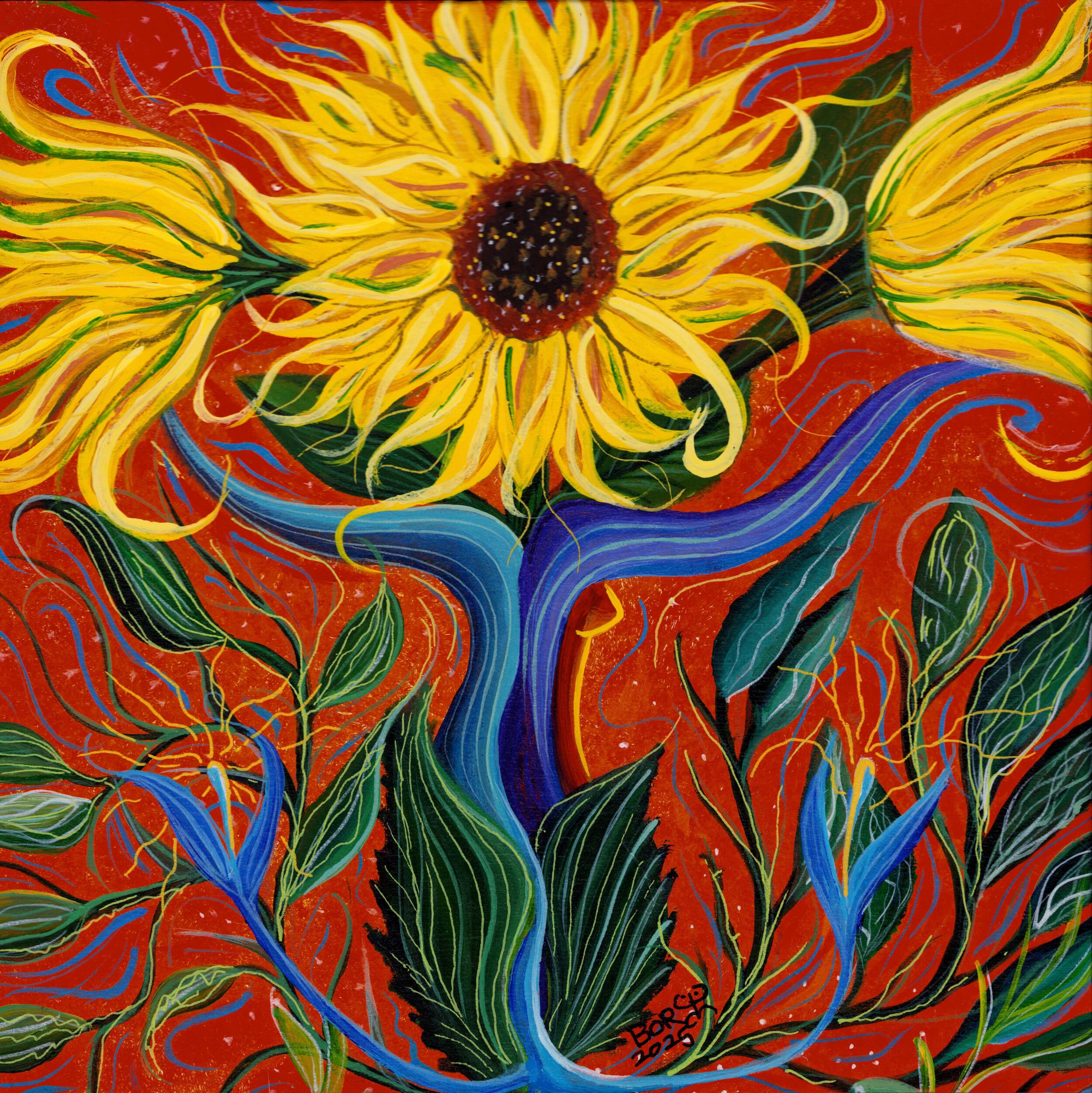
Dawn Poindexter and artist Hector Rodriguez first met on a Zoom call. Hector wanted to meet Dawn to inspire the art he would create to accompany her article in the Justice Collaboratory’s The Notebook.
Hector, who was recently released after spending thirty years in prison, said, “I was tasked by Justice Collaboratory to create an art piece reflecting Dawn’s heart-wrenching loss of her child to gun violence. As I read her words and then spoke with her, I began to wonder about the emotions of the mother of the man whose life I took. Did she experience a similar anguish? Did she also seek answers? I found myself grappling with these thoughts and wanted to somehow create an image that would give Dawn a sense of peace of mind that I couldn’t give to the mother of the man whose life I took.”
Several months later, after the article’s publication, they sat side by side on a panel discussion. Hector spoke about the impact Dawn has had on him. He now shares Dawn’s story when he speaks to youth about the impact of gun violence at juvenile detention facilities. He asks them to consider: “How would your mother feel if you were killed?”
Art: Hector Rodriguez, “Dawn’s Energy”