As a public defender in Washington, D.C, I have represented people serving extreme sentences for the past decade. I have seen firsthand how our prison system, an outgrowth of slavery, tries to deny incarcerated people their humanity, dignity, and individuality.
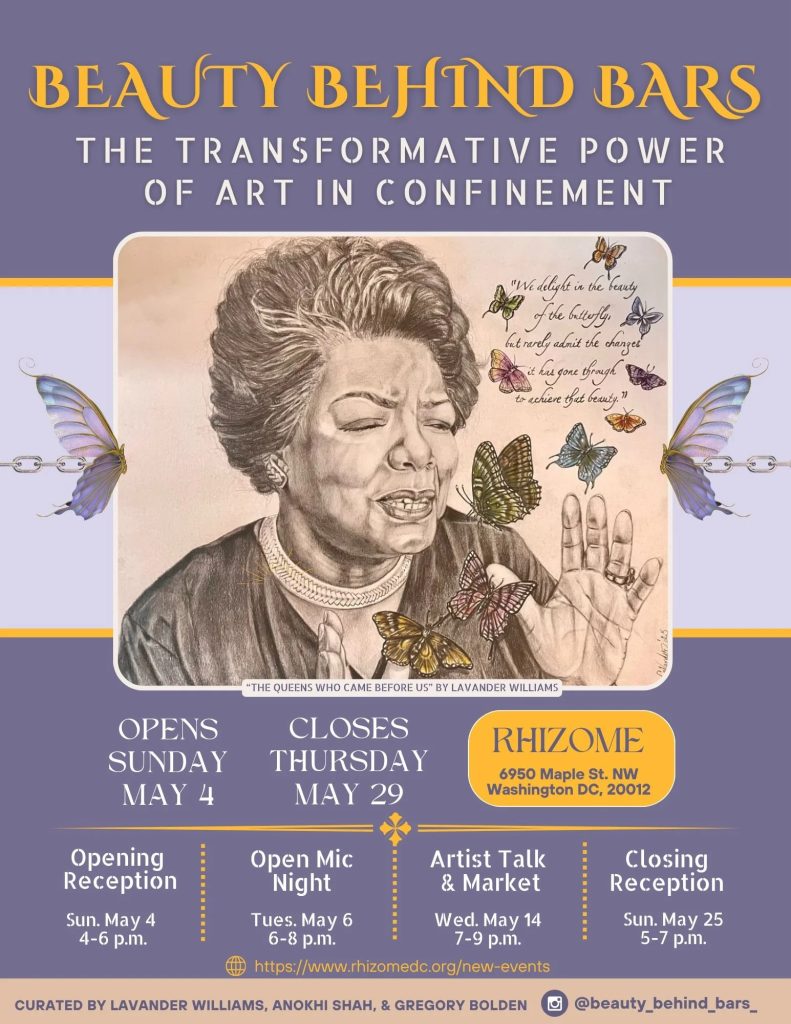
In the fall of 2024, I cofounded Beauty Behind Bars to push back against that erasure, alongside D.C. public defender Robert Hornstein and LaVander Williams, a formerly incarcerated writer and multidisciplinary artist. Greg Bolden, another formerly incarcerated creative and the founder of Bold-N-Art LLC, joined our team last year. Together, we curate art and poetry by people who have survived incarceration and those still living within its grasp.
Most of our artists were incarcerated as children or young people and spent or have spent over two decades in prison. Roughly half of them are still in prison today.
Over the past year, we have curated four exhibits across D.C., partnering with galleries, community art spaces, and churches. We also shared our artists’ work at a Free Minds Book Club & Writing Workshop event at the Kennedy Center. Alongside our community partners, we have garnered more support and encouragement for our entirely volunteer-run, donation-based project than we ever imagined possible.
The following conversation between myself, Greg, and LaVander explores the project’s origins, the realities of creating art in prison, and the importance of ensuring that confined artists are heard both within and beyond their communities.
—Anokhi Shah, cofounder of Beauty Behind Bars
Anokhi Shah: Can you both talk a bit about what inspired you to make art while incarcerated? Were you always creating art, or did you develop the craft in prison?
LaVander Williams: I didn’t really take art too seriously until I went to prison. One of my homies, who was serving life at the time, made and sold handmade cards. He taught me his trade, and although he went home a few weeks later, his lessons opened the door for me and showed me what I was capable of.
Greg Bolden: I’ve done art since I was a kid, but I also didn’t take it seriously until I was incarcerated. In prison, though, art became my addiction—I couldn’t sleep if I wasn’t creating.
LW: Yeah, I agree with that. Prison is a disparaging and heartbreaking place. There’s so much going on—you’re surrounded by trouble, stabbings, violence. Mentally, you’re trying to do anything to get away from that. You’re looking for a way to comfort yourself. That’s what art was for me.
GB: Art was also a way for me to hold myself accountable. There’s no such thing as a victimless crime. While I was rehabilitating and reinventing myself, I took a victim impact class. It really changed my life, changed my perspective.
I stopped thinking along destructive lines and started living by values of love, liberty, and happiness. Once you get that in your soul, you think: I want for my neighbors what I want for myself. The freedom to live, love, and be happy.
LW: Art gave me discipline. I didn’t know how to draw at all when I came to prison. I taught myself through books and practice, and I’d just sit there and sketch it up. Over time, I started drawing in pencil, which is now my specialty.
I tried to make each new piece better than the last, challenging myself to add new elements, build reference images from collages of multiple sources, or branch off into other mediums. I’m constantly trying to one-up myself.
GB: What about you, sis? What inspired you to make art?
AS: Like both of you, I’d been making art since I was young, but didn’t do it consistently until later in life, when I started working in public defense. To me, it’s cathartic—a way to process trauma, grief, and rage; it’s my form of protest. I haven’t been incarcerated, but as someone with loved ones in the system, and who has been fighting against mass incarceration my whole adult life, I feel like it’s important to use my creative voice to advocate for change.
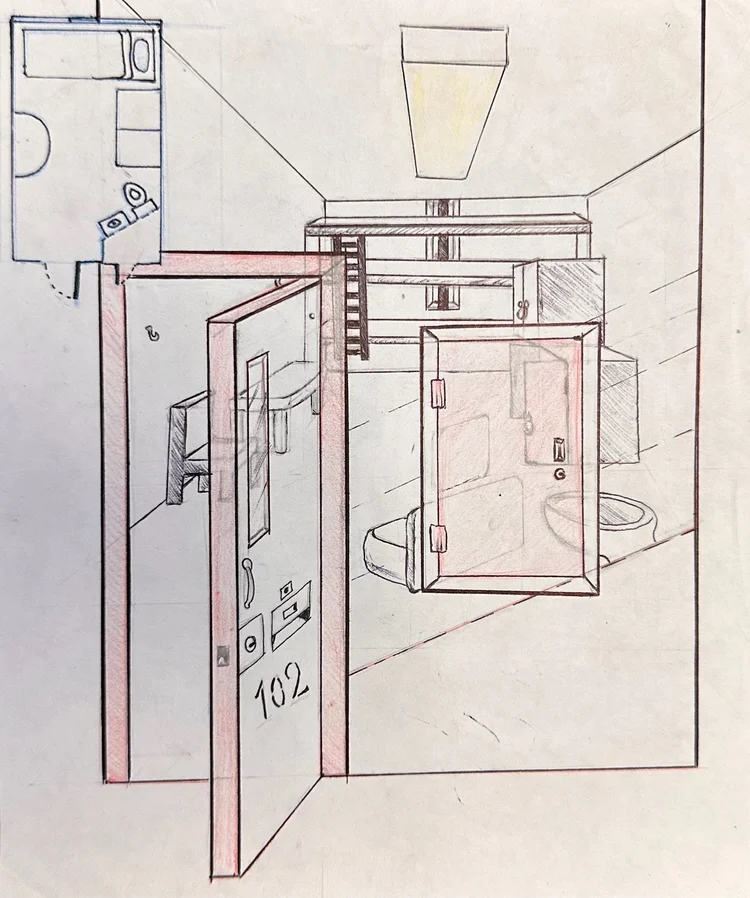
AS: OK, another question for y’all: People always ask how incarcerated people create these amazing works of art in prison, given obstacles from staff and fellow residents, financial limitations, and restricted access to art materials. Can you talk a little bit about the challenges you ran into?
GB: In prison, a lot of people won’t support you. There’s a lot of competition—many residents are forced to make a living selling art, and they don’t want you to be better than them and take their business.
One time, I got a Hobbycraft book and an orderly took it on purpose. So I started studying in silence, trying to get my skills up. We had an art show at this one facility and I placed first. I continued to place first year after year.
That’s not to brag, but to say that those wins helped me feel good about my art. After that, I started sharing what I learned. If people didn’t have art supplies, I’d say, “Take this . . . but don’t break it!” I think art should be a shared craft.
LW: Yeah, I experienced that kind of gatekeeping too. Some people don’t want to show you certain skills because they think you’ll get in their way or become competition. You might make twelve dollars a month through a prison job—they pay you pennies an hour. So people are hustling just to afford basic necessities.
Also, the corrections officers can view you with suspicion if you do something outside of the norm, even when you’re staying out of trouble. They’ll make up arbitrary rules like, “You can’t do this, you can’t do that.”
One day I had to really break it down to them. I said: “I got a lot of time in here. I could be getting into all types of trouble, but I’m doing this. Just let me do this.” They heard me, and after that, they were cool. And not all residents are unsupportive; a lot of the homies really took a liking to me once they saw what I was doing. They wanted to support me.
AS: Did you have a hard time sending your art home? Greg, you had some big pieces, like your portrait of legendary guitarist Chuck Brown. How did that work?
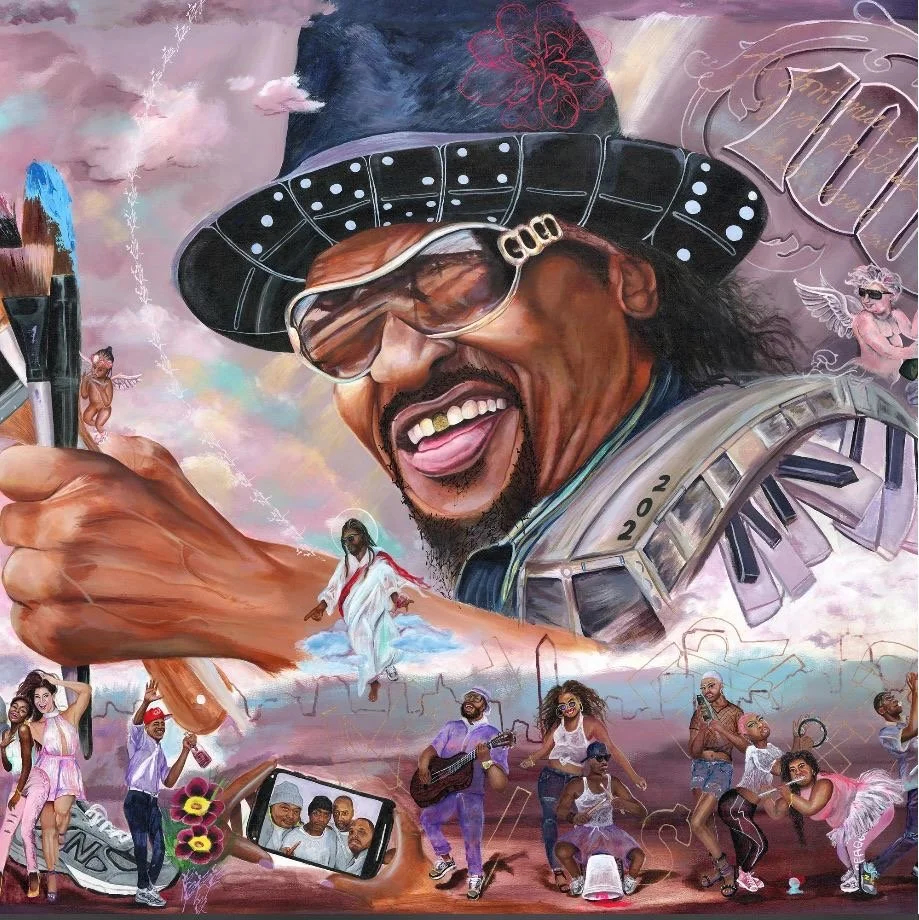
GB: I’m honestly surprised some of these pieces made it. At the last place I was at, Rivers Correctional Facility in North Carolina, we were allowed to give our artwork to family members during visits. But in most facilities, you have to use certified mail and pay for all the postage. A lot of my work was stolen or damaged in transit and never made it out.
AS: That’s devastating. I can only imagine how much artwork by incarcerated people has been lost. I’m honestly shocked we were able to get as many pieces as we did for various exhibits. A lot of them arrived through family members or friends who had kept them safe for years.
LW: I sent a lot of my stuff to you when I was inside because I was getting transferred, and like Greg said, belongings often disappear in transit. The rules are different at each facility—sometimes art supplies are allowed at one place, but not another. I remember you told me you’d keep my stuff, so I sent you four boxes full of drawings, handmade cards, sketchbooks, pencils. They wouldn’t let me get any of that back after I was transferred. But I still had some pencils, so I kept sketching.
AS: And you kept learning music! My favorite story about you, that I always tell people, is how during COVID you made a keyboard out of paper and kept studying your piano books to stay sharp.
LW: Yep. I had a piano at the place before that, and I played every day. But then I got transferred during COVID, and we were totally locked down. I did what I could, and the books y’all sent helped me keep learning.
AS: What did it mean to you both to showcase your work with Beauty Behind Bars, and to be involved in curating our exhibits? What do you think other artists get out of these exhibits?
LW: It means a lot to show people who we really are. People out here in the free world, they’re compassionate enough to try to understand the reality of what you go through inside. In prison it’s like, “You’re in here, I’m in here, stop crying!” But people out here, a lot of them want to know what prison life is like. To be able to convey it in this way, and for people to understand it—that’s deep, man.
AS: Greg, I know this wasn’t your first exhibit. You’ve been showing work for a while. What was it about this project that made you want to get involved?
GB: I first came to y’all because I wanted to showcase my brother Harry Ellis’s paintings. He and I were at Rivers together, and we used to paint every single day. I can’t hold a candle to him. While I was there with him, he created my favorite piece of his, “I Am a Man, Not 37686-007.”
GB: Harry wanted to bring the audience into the mindset of what goes on in prison and what inmates must endure. The piece is a self-portrait with Uncle Sam and psychologists, basically showing how people are used as guinea pigs in prison. It also speaks to the white superiority complex we have to endure.
It’s a deep piece, and I feel it because I’ve been through the process, and he’s still going through it. Most people don’t have the mental fortitude to make it out of prison. When you’re inside, it can feel like you’re being trained to be a functional slave. The piece is a cry for help. It speaks to our humanity—not just as people of color, but as people, not numbers.
I could talk for hours about it. It speaks to that humanity aspect, not just being a person of color, but a person and not just a number.
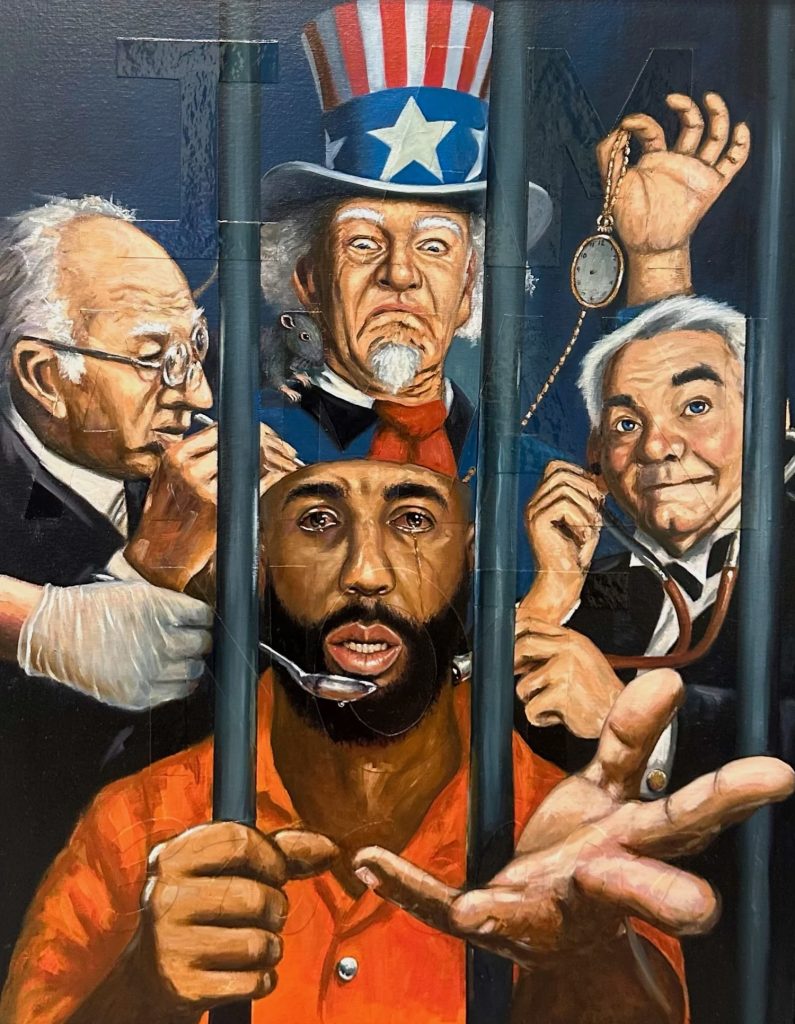
AS: It’s my favorite piece of his, too. And I remember when I first received it, I didn’t notice the resin overlay with words “I Am a Man Not 37686-007.” You can only really see it when the light hits right, and it’s so powerful.
LW: I remember when Anokhi first brought Ellis’s piece into the office. I was just like, “Whoa, who did this?” When you look at it, it’s like, when did he even have time do this? It’s perfect. The emotion behind it, the colors, the idea—it’s perfect.
AS: How did you all pick which of your pieces you wanted to exhibit?
LW: I left that up to you! There were some pieces where I was like, that’s just a sketch, or it’s unfinished or something. I’m my own worst critic. But even something you might not see the value in, someone might resonate with it. So when you said I should show something, I went with it. It was cool to see my progression over the years, from my self-portraits to celebrity portraits. And I created new pieces for some exhibits, like my Maya Angelou piece and the one honoring the children killed in Palestine.
GB: I included my Chuck Brown piece because it’s a celebration of D.C., the place most of us grew up. It’s a joyous piece. A lot of our work deals with controversial topics, which is great, but I think the best thing about our exhibit is that there’s so much variety.
I displayed a bunch of other pieces as well, including fourteen or fifteen Van Gogh portraits I’ve made over the years, representing different versions of the artist. I chose to paint Van Gogh because he’s also someone who experienced trauma and mental illness. I don’t think there’s enough attention paid to that in prison, and he’s an example of someone who channeled his pain into beautiful art.
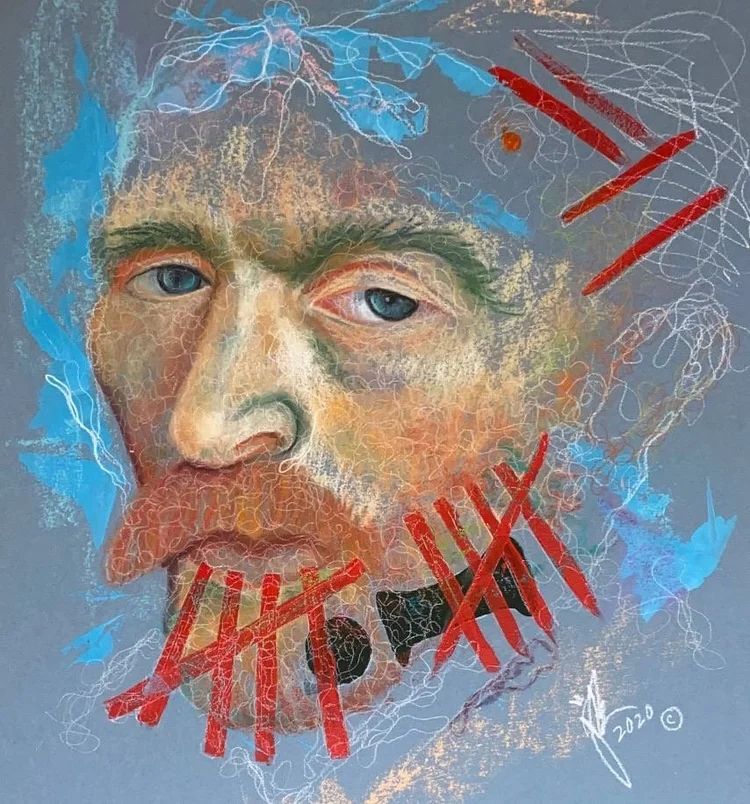
AS: I struggled with whether I should include my own pieces in any exhibit at all, because the point of our project is to display art by people who have experienced incarceration. I ended up including a few pieces that honored artists who couldn’t be here. One of them is a collaboration between myself and Jovan James (an entrepreneur with his own clothing line), and I like that it was the product of us collaborating across prison walls.
I also put up tributes to two former clients, David Johnson and Roy Tatum, who have passed away. Both pieces incorporate lines from their poems. And I displayed some “Free Subu” pieces for my family friend Subramanyam “Subu” Vedam, who was exonerated after forty-two years for a crime he did not commit. He’s still not free and is now detained in ICE custody.
LW: I think a big part of what we do is give people who aren’t here a chance to be here, so to speak. Even if you’re behind bars, you can still contribute something, and your family can come and see it, the community can come see it. Most of the artists have been through trauma. They’ve been through stuff. A lot of them aren’t really expressing it verbally, so this is where they lock in. They show their emotions through pictures or poems.
AS: I completely agree. The heart of our project is making sure people can continue to express themselves and share their whole selves with the world.
On that note, people always ask us: “What are some ways we can help? We’re so moved by this artwork—how can we support the artists?” There are many ways. Financial support is the big one, of course—you can donate to our artists and our project through our GoFundMe, which we recently created.
If you don’t have the funds but want to help in others ways, you can email us for information about how to write letters to our artists directly; host a future community event, pop-up exhibit, or extended installation; or volunteer to help us organize those events.
GB: Our next steps are applying for grants and making Beauty Behind Bars an official nonprofit. It’s hard to balance all of this with our full-time jobs and our own art practices, so we need more support to keep it going. We’re deeply grateful for the support we’ve received so far.
Beauty Behind Bars will be showcasing later this year at Rhizome DC, St. Mark’s Church, and more. Follow our Instagram for the latest updates.
More from our decarceral brainstorm
Inquest—finalist for the 2025 National Magazine Award for General Excellence & cited in The Best American Essays 2025—brings you insights from the people working to create a world without mass incarceration.
Sign up for our newsletter to get the latest in your inbox every Saturday.
Newsletter
Artists with work currently included in Beauty Behind Bars: Gregory Bolden, Charles Buie, Carlos Carolina, Kenneth Collins, Curtis Dickson, Andrew Daniels, Charles Elegalam, Harry Ellis, Steven Harrison, Ernest Heath, Arlis Hicks-Bey, Jovan James, George Johnson, Mark Johnson, Kenard Johnson, Richard Johnson, Melvin Jones, Derrick Lewis, Preston Logan, Tizer Muse, Robert Odom, Antonio Oesby, Anokhi Shah, Keith Starr, Fernard Strowbridge, David Watkins, LaVander Williams, Michael Woody.
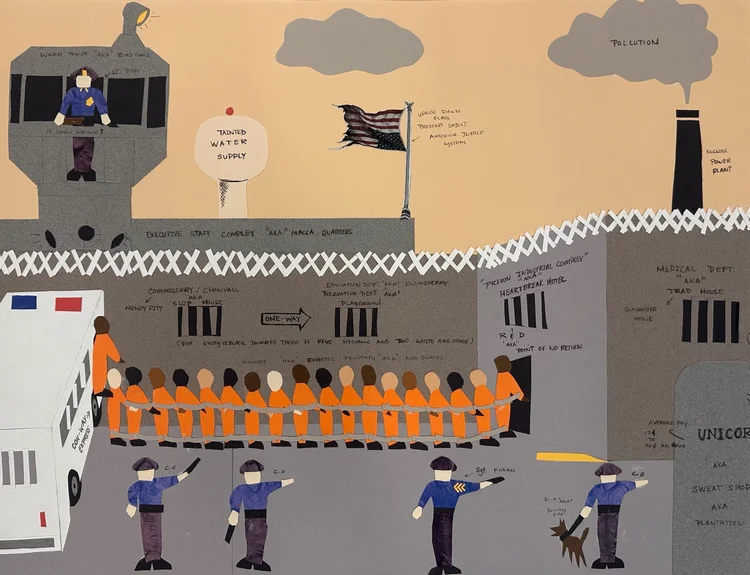
Header image: Harry Ellis, The BOP (2021). Paper collage, 22 x 28″.
Contributors