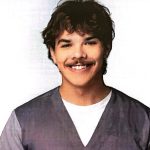
On a warm, cloudy day in April 2022, seventy-one-year-old Mandy Koziol drove to Jefferson City, her husband in tow, to testify before the Missouri state legislature. Her forty-nine-year-old son, John Young, was dying in custody. And the state was letting it happen.
U.S. prisons are both the site of—and the engine for—a vast medical crisis. Incarcerated people are often already disabled when they are sent to prison, and incarceration both worsens preexisting conditions and generates new disability. In prisons across the country, there are people with serious illnesses who receive almost no medical care whatsoever, sometimes even for life-threatening conditions. And due to the U.S. addiction to long sentences and mandatory minimums, the incarcerated population is rapidly aging, with no plan in place for how its increasingly intensive health needs will be met.
One window into this crisis is the largely overlooked population of incarcerated people receiving treatment for cancer or living with its aftermath—people like John.
John had a long history of cancer and related surgeries—including aortic valve replacement—long before he was ever incarcerated. He received his first cancer diagnosis in his mid-twenties. In 2022, five years into his sentence at Missouri’s South Central Correctional Center (SCCC), John began experiencing symptoms of a leaky heart valve. He reported these symptoms to SCCC’s medical center. At his medical appointment, a physician working on contract refused to listen to John’s heart with a stethoscope.
“Because he knew,” says John, “that all he would have heard was fluid.”
This was how Mandy found herself sharing her son’s story before a panel of Missouri lawmakers, in support of House Bill 1922: proposed legislation that would reform Missouri Department of Correction (MDOC) oversight procedures and increase accountability for its staff and contracted personnel. As Mandy spoke, she stood alongside dozens of other supporters of the bill, each representing an incarcerated loved one with a story like John’s.
John shares with me that he took pride in his mother’s awareness campaign. “That’s what it takes,” he tells me, “people making sacrifices.”
But the bill didn’t pass.
Four months later, John was transferred to Farmington Correctional Center (FCC), where we met and remain incarcerated together.
Within three days of his transfer to FCC, John began to feel so dizzy he could not stand up for morning count. He was rushed in an ambulance to Missouri Baptist Medical Center in St. Louis, where a doctor told him he would die without immediate inpatient care. John had a GI bleed, which was affecting his heart and required emergency surgery. His aortic valve also needed to be replaced. Handcuffed to the hospital bed, John watched as the doctor screamed at the officers who had accompanied him.
“I want to know who’s responsible for this man’s health,” the doctor demanded. “There’s no way you people didn’t know his heart was failing.”
John’s earliest possible release date is 2035. He worries every day that he will die in prison.
“It nearly snuffs out the light at the end of my tunnel. The only thing that keeps that light there is my faith.”
John is closer to his family than ever. His stepfather was recently diagnosed with carcinoma, and John’s lifelong battle with various forms of cancer means the two men can lean on each other.
“I put him on the prayer wall, he puts me on the prayer wall.”
It’s one little thing they can do for each other, when they can’t do much else.
Like an increasing number of state departments of corrections, Missouri’s DOC contracts most of the health care for its incarcerated population to a third-party vendor. Since 2021 that vendor has been Centurion Health, a subsidiary of Centene Corporation—a Fortune 500 company that has agreed to pay over $1 billion to settle Medicaid overbilling and fraud allegations in at least 20 states. Centurion itself holds hundreds of millions of dollars in carceral health-care contracts across sixteen states.
Contracted health-care agencies are supposed to operate under the ethical principle of equivalence of care. This principle asserts that prisoners are entitled to health care of a standard equivalent to that available to the general public in the same country. The idea is widely endorsed in national and international norms. However, when faced with the clinical and organizational realities within correctional environments, the principle often proves insufficient and requires adaptation.
As Gérard Niveau argues in a 2007 report in the Journal of Medical Ethics, facial adherence to the principle may undermine humane and effective medical responses in high-stakes scenarios. In other words, providing truly equitable care in prisons sometimes means going beyond traditional equivalence models, because the conditions surrounding carceral care and post-care recovery are so unique.
With standards that feign adherence to principles, and providers that feign adherence to standards, many incarcerated patients never see anything remotely like equivalence. Despite spending $212 million on its contract with Centurion, deaths in Missouri prisons have soared. In early 2026, state lawmakers held hearings about this alarming fact, and sought answers for why deaths in custody are not included as a performance measure for Centurion. The Missouri Independent also reported that since its contract began, Centurion has been fined in each quarter for failing to meet even its own lax standards, resulting in $3 million in fines.
There is an obvious conflict of interest embedded in the model of contractual health care: by its very nature, it pits profit margin against the responsibility to provide often quite costly medical care. Numerous, well documented deaths behind bars suggest the former often wins.
According to a close friend who was incarcerated with him (and whose account was later confirmed by Sloan’s family), Jimmy Sloan, a seventy-one-year-old former truck driver, lived in a handicap cell at SCCC in 2020. He could walk short distances, but several health issues—a chronic heart condition, kidney failure, back problems—kept him in a wheelchair most of the time. Despite being in stage four kidney failure, Centurion refused to place Jimmy on a renal diet that would have aided in kidney function.
Jimmy was also a cancer survivor, and had half a lung removed some years before. While he was in remission, periodic blood tests were taken to monitor his condition. In November 2021, blood tests indicated the possibility of cancer recurrence. But despite Jimmy’s appeals and pressure from his family, no action was taken by Centurion until January 2023, when a CT scan detected cancer. Chemotherapy was started, but it was too late. The cancer had advanced considerably. The medical provider tried a very strong, aggressive treatment toward the end, but by that time, Jimmy’s body was too weak to both fight the cancer and withstand the debilitating side effects of the chemo. He died late in the summer of 2023.
Centurion did not respond to a request for comment.
More from our decarceral brainstorm
Inquest—finalist for the 2025 National Magazine Award for General Excellence & cited in The Best American Essays 2025—brings you insights from the people working to create a world without mass incarceration.
Sign up for our newsletter to get the latest in your inbox every Saturday.
Newsletter
Looking back, seventy-year-old Bruce Cofer can think of at least five friends he had at SCCC who were diagnosed with cancer and who eventually died. He volunteered in hospice for years there, where he watched people deteriorate physically while the walls around them wore away at their psyche. He remembers how they were systematically neglected, their symptoms ignored, until the cancer became terminal.
Although administered by Centurion in all Missouri prisons, care still varies by facility. Recently diagnosed with prostate cancer himself, Bruce is grateful to be at FCC, away from the neglect he witnessed at SCCC. At FCC, he says, “staff are sympathetic. They may not act as quickly as I would like, but I don’t feel neglected. The nurses are very caring.” (Since this article was written, Cofer has been transferred to Algoa Correctional Center.)
Despite this, his care has also been significantly delayed. He was diagnosed in January 2025 after bloodwork from December 2024 showed elevated levels of prostate-specific antigen, a common screening marker for prostate cancer. He has already gone on five medical out-counts, including for an MRI and a biopsy, but he is still waiting to begin radiation therapy at a treatment facility in Jefferson City.
“The scheduling process slows down treatment,” he says, “because medical staff have to coordinate with custody staff. You could be scheduled for an out-count, then the [emergency response] team is here, and you’re out another month.”
Bruce says his treatment has felt like “a collaborative effort” between him and his oncologist, though he admits he has little basis for comparison beyond the egregious medical neglect at SCCC. There, residents serve lengthy or life sentences while receiving minimal medical care. To him, it often seems that the more time a person owes the state, the less the state cares whether they make it through.
I ask him why he opted for radiation therapy instead of surgery. The main factor, he says, is his age: his doctor told him he can expect to live another twenty years with radiation treatment. The secondary factor is that he does not want to go through the recovery process in prison, for a variety of reasons.
“It’s a serious surgery with a long recovery,” he explains, one that involves diapers, catheters, and urostomy bags. “It draws attention, and it puts me in a bad spot. Also, this place is filthy. This is not a good environment in which to recuperate.”
Throughout his treatment, he will need to take testosterone blockers, and he is concerned about the potential effects on his personality. He knows that he needs to be around people who know him, who will understand what’s happening and why, and who will accept him.
“I just need to be in an environment where I will heal,” he says, “and not just physically.”
Bruce has a friend, sixty-year-old Ronny Jordan, who also has cancer and has provided him a lot of support since his diagnosis. “It’s a lonely spot to be in,” observes Bruce, and so the two rely on each other for emotional support. Like John and his stepfather, Bruce and Ronny can talk to each other in ways that most others just can’t.
“If I say, ‘Ronny, I’m gonna be in diapers,’ he gets it.”
Like John, Bruce is reliant on support from his family. In his case, his family is his sister. He has no contact with his wife or children, and a lack of shared experience has led to emotional drift in his relationship with his brothers. As a result, his sister is the only family member who knows about his diagnosis.
“She is the best support anybody could have,” he says. “She helps me think through my issues, she prays for me, and she’s been my help and support for the duration of my incarceration.” When Bruce is worried about delays in his treatment, it’s his sister who calls the prison’s central office to check in.
Bruce is from Philadelphia, and you can hear it in his voice, especially when he talks about family. He has just three and a half years left on a twenty-five-year sentence. Upon release, he plans to head back to Philly, to his sister and his brothers, whom he knows haven’t forgotten him.
In 2020, at Northeast Correctional Center (NECC), a state prison in Bowling Green, Missouri, a group of residents started a support group for incarcerated cancer patients. Having heard so many stories of medical neglect, I was curious to hear more about how incarcerated people were taking up the work of caring for one another after a cancer diagnosis.
It takes three weeks and two false leads, but eventually a mutual friend connects me with Leroy Ross, one of the founders of NECC’s New Hope Cancer Support Group. (Leroy is now at FCC, along with John and me.)
“It really started with LA,” Leroy says of his friend, Devlyn “LA” Howard. “LA didn’t want to talk to anyone.”
The fear and frustration of Devlyn’s diagnosis with stage three pancreatic cancer in the summer of 2020 left him bitter. He shut out his peers, became uncooperative with staff, and forfeited his honor status. As his cancer progressed, he was sent outside the facility for medical procedures, returning each time to NECC’s Transitional Care Unit (TCU)—a small, hospital-like ward where seriously ill residents are closely monitored as they recover before returning to the general population. He was no more cooperative with medical personnel than with guards.
While Devlyn was backsliding, a group of peers who had also been affected by cancer tried to get through to him. When he refused their requests to meet, they didn’t give up; eventually, he allowed them to visit him in the TCU. Soon after, Devlyn’s demeanor changed. Witnessing his friends’ concern finally pushed him to open up, and the talks that followed gave him a sense of calm he might never have reached on his own.
Leroy and the others in the group became a constant in Devlyn’s life. When Devlyn passed away in their presence—in July of 2022—he did so in peace and comfort, even in the midst of a violent, uncomfortable place. Leroy witnessed the power that compassion had to completely transform someone’s last months, days, or moments.
Leroy has battled leukemia throughout his incarceration. “It about got me a few times,” he told me. When Leroy received his first diagnosis, he sought knowledge and wisdom from incarcerated peers who had fought the same fight. In this way, he became part of a loose network of mentors and mentees navigating cancer behind bars.
Years later, when his cellmate was diagnosed with lung cancer, Leroy introduced him to his prison mentors, Dan Kerry and Nathan Young, and in turn became a mentor himself. They were a band of brothers, united against fear as much as against cancer.
In 2020 Leroy and three other cancer-affected NECC residents began meeting regularly to talk openly about their hopes, fears, and treatment plans. After a few months—with more cancer-diagnosed residents joining in each week, and with the tireless advocacy and support of a nurse (LPN) named Johnna Martin—the group received staff approval to have formal meetings. The New Hope Cancer Support Group was officially born.
Over time, New Hope’s founding members negotiated a framework in which any NECC resident who received a cancer diagnosis also received a pass to attend the support group. They also developed a system by which any NECC resident could request information about various types of cancer from medical personnel by submitting the request as a medical services request (MSR) form.
By the time Leroy left NECC for FCC, New Hope had begun hosting annual celebrations in addition to its monthly meetings. The group had established a flower garden and built a memorial bench dedicated to LA. It had also decorated the medical center with murals and memorial photos.
In March 2023, with support from Johnna and a number of high-ranking NECC medical staff, Leroy and the other founding members sought departmental approval to become a chartered organization. This designation would allow them to host fundraisers to donate money to cancer research on the outside.
The group sent a proposal to Trevor Foley, then acting director (and now director) of the MDOC. “Our monthly meetings,” the cover letter explained, “have allowed us to have a compassionate platform to share out struggles with cancer, diagnosis, treatment, and all the physical and mental issues that go along with that.” The document expressed an interest in reaching not only “offenders, but staff members at our facility, and cancer patients throughout our great state.” The vision was “to aid and assist incarcerated cancer patients, their families and friends in the fight against cancer in our institution and our surrounding communities.”
Despite widespread support, he declined to grant New Hope its charter.
Leroy would like to see New Hope chartered, but more than anything, he wants to see cancer support groups operating in every prison in the state. The impact that incarcerated people can have on the outside are limited. Inside, though, they encourage each other—and push for the kind of structural change that providers and legislators have so far failed to deliver.
Incarcerated people with cancer must fight for basic health care, knowing that adequate care is a long way off. But for many, the focus is more immediate: that tomorrow there will still be someone, somewhere, to call on for support.
Image: National Cancer Institute / Unsplash