
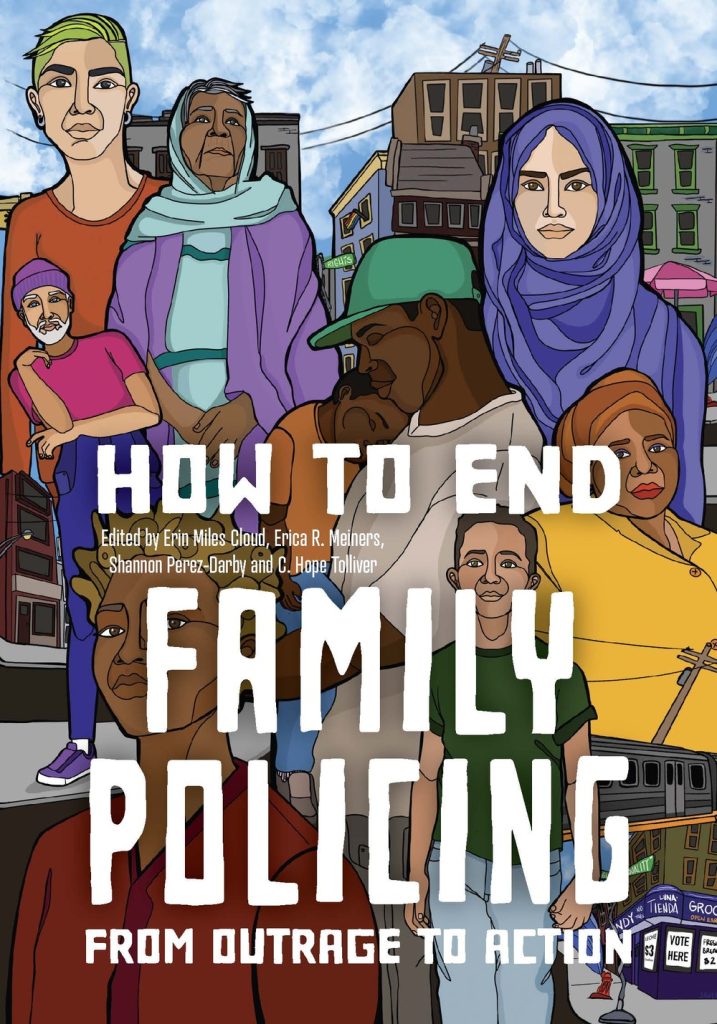
Stories highlighting the value of child welfare systems are mainstays of mainstream media outlets. Child safety, of course, is nonnegotiable, and this generally seems in public opinion to far outweigh times when the system may overreach.
But so many Black, queer, noncitizen, Indigenous, poor, disabled, and/or Latinx people—particularly women—have overlapping and ongoing experiences of being deeply harmed by these punitive systems. Panic surrounding an investigation. Confusion and anxiety after being thrust into state systems that hold violent power. Perhaps the family of origin was a site of harm, but the state’s response was as bad or worse—group and foster homes are often rife with violence. Resources always seem to flow for people to teach mandated parenting classes, caseworkers to inspect apartments, and lawyers to interview children—but not for rent, health care, childcare, food, or vacations.
Yes, young people experience violence, including gender and sexual harm. But the very real forms violence experienced by young people—particularly gender and sexual violence—have also become the repeated justifications for the consolidation and expansion of carceral or punitive logics. Far from protecting young people or resourcing care networks, all the tentacles of these punishing systems do not create safer communities.
These punishing systems distract us from asking core questions: What does make our communities stronger and safer? How can we respond to the different needs of specific communities and individuals without privileging some over others—for example, by championing the specific needs of young people in ways that may directly jeopardize the adults in their lives? And, of course, as childhood and youth are fluid and temporary life stages, why create systems and policies that may eventually be used to punish the very people we purport to protect?
Our decades of shared organizing, study, and lived experiences repeatedly remind us that the criminal legal system cannot build safety. How to end the family policing system? We must move from outrage to action.
Child welfare systems and institutions are persistently represented as beneficent and race-neutral public programs to help all children in need. This myth hides the violence the system generates and pollutes public policy and interpersonal norms and practices.
Budgets balloon for investigations into allegations of neglect and harm, while the meager funding available for antipoverty or childcare programs always seems to shrink. Mandated reporter laws requiring people to criminally report suspected child neglect or abuse expand, with deepening threats of criminal prosecution for those who fail to notify state agencies of their “suspicions.” Child welfare is routinely weaponized against specific groups, in this moment particularly against people who are queer and/or transgender.
Perhaps it is always a safe political move for policymakers to enact legislation and create new structures that profess to save the children. Yet far from creating safety, these components of the carceral or punitive state—including registries, investigations, and caregiver surveillance—deepen vulnerability and cause harm.
National statistics highlight what is often named as “racial disproportionality,” yet these numbers demonstrate that white supremacy is embedded in these harmful state systems:
- While Black children make up only 14 percent of the child population in the United States, Black children are almost a quarter of the total population in foster care.
- In the United States, 53 percent of all Black children will experience a child protective services investigation before the age of 18.
State and local data also reveal deep injustices:
- In New York City, 90 percent of reports made to child protective services involve Black or Latinx children.
- In Los Angeles, 19 percent of youth in the foster care system identify as LGBTQ (95 percent of the youth in foster care are also non-white).
- In Minnesota, Indigenous children (American Indian / Alaska Native) are 1.7 percent of the total population yet 25.8 percent of the young people in foster care. Indigenous children are 16 times more likely to experience out-of-home placements than are white children.
Black, Indigenous, and brown parents do not mistreat their children at higher rates than white parents do. Narratives about “bad parents” are as false and as anti-Black as narratives about “violent criminals” in prisons. Just as the language of criminal charges—like “lewd conduct” or “assault”—offers little accurate information about what actually happened, allegations and convictions of child neglect and child abuse are similarly unhelpful, inaccurate, and demonizing. Mirroring what unfolds in other processes of policing and criminalization, the family policing system, at every stage, targets marginalized families and subjects them to more punitive surveillance. In addition, families from these communities are more likely to come into contact with individuals or institutions who will report them to child protective services and therefore are more likely to be investigated. These investigations tip families into a relationship with carceral systems. In some states, even being the subject of an unfounded allegation for child neglect places a person on a registry that can be used to deny employment or benefits.
More from our decarceral brainstorm
Inquest—finalist for the 2025 National Magazine Award for General Excellence & cited in The Best American Essays 2025—brings you insights from the people working to create a world without mass incarceration.
Sign up for our newsletter to get the latest in your inbox every Saturday.
Newsletter
Horrific statistics such as these—which are uncontested by state agencies—are not novel. State systems of child welfare and protection—even those with decades-long public commitments to equity, cultural competence working groups, or required trainings for implicit bias—are unable to reduce the targeting of Black and Indigenous families. Yet our goal should not be ending racial disproportionality or ensuring that white or Asian American families, for example, experience the same rate of investigations or child removals as Black, brown, or Indigenous families. Rather our vision should start from the position that no kinship network benefits from investigations, surveillance, policing, or forced separation.
Rather than the misleading language of child welfare or child protective services, activists who are directly impacted by the system and also scholars—including Brianna Harvey, Victoria Copeland, and Dorothy Roberts, among many others—use the term family policing to squarely name the fact that these institutions and practices are far from benign or neutral. Predicated on an economy of hyper-individualization that strives to evade any trace of culpability or blame, these public and private institutions and bureaucracies routinely deepen and reproduce vulnerabilities. Instead of the state’s failure to regulate unfettered punitive carceral capitalism, to protect workers’ rights, or to use public wealth to support public welfare, the individual caregiver is singled out as neglectful or abusive for failing to pick up their child on time from school, failing to clothe their child in appropriate winter clothing, failing to do laundry, or failing to secure adequate childcare. The state or employer is never indicted for failing to pay a living wage, while mothers and grandmothers are deemed criminally negligent and savagely attacked for filing false addresses in order to ensure their young people are enrolled in schools they perceive to be safer and better resourced.
Whether individual case workers, foster parents, or social workers have good intentions or not, the family policing system is a core plank of the U.S. carceral state.
The surveillance and policing of families is not cheap. Public dollars are always available to investigate and monitor marginalized folks—particularly Black mothers—while pennies are made available for direct support for families in need.
One of the largest federal spending entitlement programs for children is the foster system, not social assistance or services that would go directly to kinship networks in need. Foster care funding represents 65 percent of federal funds dedicated to child welfare, and adoption assistance makes up another 22 percent. Funding sources that may be used for preventive and reunification services represent only 11 percent of the resources allocated to the federal child welfare program. Politicians enact and strengthen punitive, increasingly public registries to surveil mothers who are reported for abuse. Every state has some type of punitive registry to track both allegations and convictions of child maltreatment.
The stakes are always high in our movements to end the prison–industrial complex and to build the stronger and safer communities we need; the contexts that surround our work continue to shift. Across the globe, campaigns centering abolitionist demands have gained some traction and have resulted in some cultural shifts—for example, an increased scrutiny around policing budgets—but these temporary wins, which always ignite predictable and potent backlash, are not the finish line.
As importantly, how we struggle matters. Our own demands to end the family policing system join a landscape populated by a variety of movements that demand parental rights and purport to protect children. Libertarians, Republicans, right-wingers, and MAGA folks agitate for parental rights to shut down access to all kinds of resources and possibilities for many, particularly young people, including gender-affirming medical care, abortion and other reproductive services, and access to basic sexual health information. The myth of parental choice—adroitly masking white supremacy, the naturalized inequities baked in capitalism, and transphobia—justifies the erosion and privatization of public systems like education and circulates throughout the contemporary wave of book bans.
On the surface, our language and even some of our campaigns might overlap with these demands for parental rights. However, fundamental and foundational political differences exist between our organizing to end the family policing system and right-wing appeals to parental rights. We assert that the family policing system flourishes because of foundationally toxic ideologies—heteropatriarchy, capitalism, colonialism, ableism, and white supremacy—and our work aims to dismantle these interlocking forms of oppression. Unlike racist and anti-feminist groups such as Moms for Liberty, we argue that these interlocking and oppressive ideologies both fuel the family policing system and simultaneously represent who is often most targeted and criminalized.
We also recognize that adultism, or the belief that young people and children are less than, has diminished all our lives. Capitalism, far from producing flourishing life pathways for all, uses myths such as “parental choice” as a distraction, while the wealthy continue their tax strike, hoarding resources and opportunities. Organizing against the family policing system names and challenges these deeply harmful economic and belief systems, which the right-wing parental rights movement actively reinforces and valorizes.
Excerpted from How to End Family Policing: From Outrage to Action. Copyright © 2025 by Erin Miles Cloud, Erica R. Meiners, Shannon Perez-Darby, and C. Hope Tolliver. Reprinted with permission from Haymarket Books.