Part of the Twenty-Five Years Since 9/11 series published in collaboration with Acacia magazine.
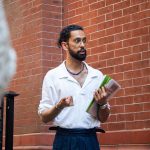
Public historian and founder of New York Narratives Asad Dandia was only eight years old when a plane crashed into the World Trade Center’s North Tower on the morning of September 11, 2001. He has faint memories of the Islamophobia that spread through his native Brooklyn and the country in the ensuing days and months. But it wasn’t until 2012—over a decade after the attacks and well into the Obama era—that he found himself in the crosshairs of a sweeping surveillance apparatus designed to target Muslims involved in local mosques, Muslim student associations, and other community-based organizations.
On the occasion of the twenty-fifth anniversary of 9/11, I spoke with Dandia about being targeted by the NYPD for his mutual-aid work, fighting back in a landmark lawsuit assembled in part by Ramzi Kassem—now Mayor Mamdani’s chief counsel—and ultimately winning.
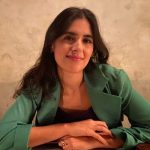
—Hira Ahmed, Editor-in-Chief, Acacia
Hira Ahmed: For folks who are not familiar with your case, can you briefly explain what happened in March 2012?
Asad Dandia: My friends and I had started a mutual aid group focused on giving groceries to people in need—mostly Muslim families. Every Friday, we met at the Jummah prayer at my masjid in Brighton Beach, Brooklyn. We would go to the grocery store, each chip in ten or fifteen bucks, and buy essentials that we delivered to the community. Eventually I put something about it on Facebook and community members started donating money to us and offering to volunteer. It really took off from there, and soon I was getting invitations from Muslim Student Associations asking me to give talks on their campuses.
In March 2012, a young Bangladeshi brother from Jackson Heights sent me a message on Facebook to say that he wanted to get involved in the work that we were doing. At that time, getting a message from a Desi Muslim guy saying, “Hey, mashallah, you’re doing such great work. How can I get involved?” was not out of the ordinary at all.
Then in April, a mentor of mine who worked as a police officer said he needed to speak to me privately. We met for the maghrib prayer at the masjid and after we went to his car. Before he started driving, he asked me for my phone, turned it off, and locked both of our phones in the trunk. He said, “I need to speak to you without these present.”
We’re chatting as he drives, and eventually he asks me about the organization I’m running. I tell him we’re doing great. We have this volunteer base of thirty people. We’re going to all these neighborhoods, feeding all these people. At that point, he stops his car and tells me that I was being watched. I remember him saying something like, “I just came back from the precinct and there’s a file with your name and your photos in it.” He advised me to stop the work if I could.
A week later, another friend of mine reached out to me. He said that someone he knew with connections to the NYPD heard that the police had photos of us doing our work. So I’m now hearing from two different sources that we were being surveilled. Apparently, the NYPD had threat levels that ranged from green to red, and we’d been identified as a code-orange threat. I never looked at that color the same way again.
More from our decarceral brainstorm
Inquest—finalist for the 2025 National Magazine Award for General Excellence & cited in The Best American Essays 2025—brings you insights from the people working to create a world without mass incarceration.
Sign up for our newsletter to get the latest in your inbox every Saturday.
Newsletter
I shared these warnings with my fellow organizers, who were all concerned. We had an event planned for June where we were going to host Napoleon, or Mutah Beale, who had been part of Tupac Shakur’s entourage and his rap groups Outlawz. We were all on that wave, you know: nineteen-year-old Muslim brown boys who wanted to hear this guy talk about his journey from hip hop artist who’d known Tupac to pious Muslim who now lives in Saudi Arabia. We agreed that after that event, we’d shut down the organization to protect ourselves. But then the event was a huge success, and hundreds of young Muslim men and women attended. We felt so good about it that we decided to keep the charity going after all.
In October of 2012, I’m coming back from a food delivery when I get a text telling me to check Facebook. There’s a confession posted there from the young Bangladeshi brother admitting to being an NYPD informant investigating terrorism. He was not a trained officer; he was somebody who had gotten caught up on drug possession charges. He had been kicked out of school and struggled with several mental health issues. He was literally a kid—eighteen or nineteen, my age—who needed help. And the police used him. They said, “Either you surveil for us, or you go to jail.” And he did what most of us would do in his circumstance.
Our whole community was rattled. The mosque where we fundraised, my childhood mosque, told us we had to stop our mutual-aid work. My relationships with so many people were damaged because I had been the one to introduce him to everybody.
The media put out a few articles about it. I got some phone calls from the Associated Press. Then someone contacted me from the CUNY School of Law. When I met with a few lawyers to recount what I had endured, they told me they were planning to sue the NYPD and were looking for plaintiffs. They asked if I would be one of them. The lawyers I met with that day were Diala Shamas and Ramzi Kassem. We were all babies back then.
I told them I wasn’t sure and they told me to take some time to think about it. At our next group meeting, I met a Pakistani American woman named Hina Shamsi, who directs the National Security Project for the ACLU. She became an older sister figure to me. She said, “I know you’re scared, but I want you to know that the ACLU is going to have your back, and if you need me to speak to your mama, I can speak to your mama.” She spoke Urdu. She was from Karachi, just like my mom. So I agreed to do it, on the condition that if something happened to me, she had to be the one to tell my mom.
I signed my name as a plaintiff, and we officially launched the lawsuit on June 18, 2013. We gave a big speech in front of NYPD headquarters, where I learned that some of my co-plaintiffs were religious teachers of mine. We were a diverse group, covering the three biggest Muslim demographics in the city: Black, Arab, and Desi. It was a big moment, and I was there wearing my H&M skinny tie and coat. I didn’t own a suit until many years later.
Our lawsuit was called Raza v. City of New York, after Hamid Hassan Raza, the lead plaintiff and a Brooklyn imam whom the NYPD had surveilled since 2008. We were suing not for money but for policy change. Our lawsuit asked for additional protections to be appended to a set of guidelines called the Handschu decree, which regulates how the NYPD can investigate political and religious activity. The guidelines are named after Barbara Handschu, an Asian American political activist and attorney who in the 1960s was surveilled by the NYPD alongside numerous activists from groups such as the Black Panthers and the Gay Liberation Front. With Handschu as the lead plaintiff, they filed a class-action lawsuit, Handschu v. Special Services Division (1971)—and ultimately won significant protections. The case led to a consent decree entered in 1985.
Within two hours of filing our lawsuit, I was at the airport with my family, preparing to leave for an Umrah pilgrimage to Mecca. When I hand my passport to the agent, he gives me a nervous smile and I know that something is about to happen. He stamps my boarding pass with the quadruple S that stands for “secondary security screening selection.” My family gets the extra pat-down, but we are allowed to fly. On the way back, however, we are held at the airport for about four hours. TSA tells us that they will go through our luggage, a process that my mom bravely demands to be present for.
Eventually we get home, and my dad is like, “Guess who visited while you were away?” I figured it had been the NYPD. He says, “No, the FBI.” That’s how I realize that a federal agency is collaborating with the police to retaliate against me and other Muslims through the Joint Terrorism Task Force.
Ahmed: This is retaliation for your lawsuit?
Dandia: Exactly. My dad had gotten the card of the FBI agent and I gave it to Diala. Diala called them, told them to leave me alone, which they did.
But then they went after my friends in the neighborhood. One of them was undocumented. The FBI abducted him and told him that he had two options: they could deport him, or he could spy on us for them. He refused to spy on us, so they tried to deport him. Ultimately, they didn’t succeed. A judge granted him permission to stay. Soon after that, I bumped into him and he told me what happened and that we couldn’t be friends anymore. He told me, “Well, you know, they asked me about you,” and I got the message. He had to protect his family. It was nothing personal.
When counterterrorism forces make you a focus of their interest, you lose friendships because people are afraid of associating with you. That process rarely gets talked about. People always talk about the case, the legalities, the bureaucratic stuff. But they don’t talk about how the consequences affect your relationships. I never saw my friend again after that day. I later learned that after Donald Trump won and issued his Muslim ban, he fled the country. That was around the same time that our case was being decided.
Because we were asking to enforce and increase protections guaranteed by the Handschu decree, the case was in the Eastern District of New York, and it was heard by the judge who had presided over the original Handschu case nearly fifty years earlier, Judge Charles S. Haight Jr. He was nearly ninety by then. A few months after we delivered testimony before him, a crazy thing happened. Ramzi called me and said, “Guess what? The judge is not satisfied. He wants us to make stronger demands against the NYPD.” I can’t imagine that happens very often. You never hear of a judge saying that a plaintiff’s demands don’t go far enough to protect people from surveillance. But I guess he got tired of seeing the same shit for fifty years. So we came back with stronger demands, and in March 2017 the courts ruled in our favor and added our enhancements to the Handschu decree.
Ahmed: Before all of this happened, what was your relationship to law enforcement and the police? What had you thought about the cops? How did they show up in your community? And how did your feelings change subsequently?
Dandia: This happened at a very young age for me, so my views toward law enforcement were not yet sophisticated. I was a teenager, and you kind of just see law enforcement as a part of life here. I was aware of some of the ways that law enforcement can be used to target people, and that came from just being a Muslim in post-9/11 America. And by then I had also read Malcolm X, and this was also not long after Occupy Wall Street. Arab Spring was late 2010, Black Lives Matter was 2013. I was developing my own political consciousness as all of this was happening. So I didn’t have a totally naïve “police are there to protect us” mentality. I had an understanding that law enforcement is not just one thing; it can be many things, and sometimes those things involve hurting people rather than protecting them. But it was still very abstract.
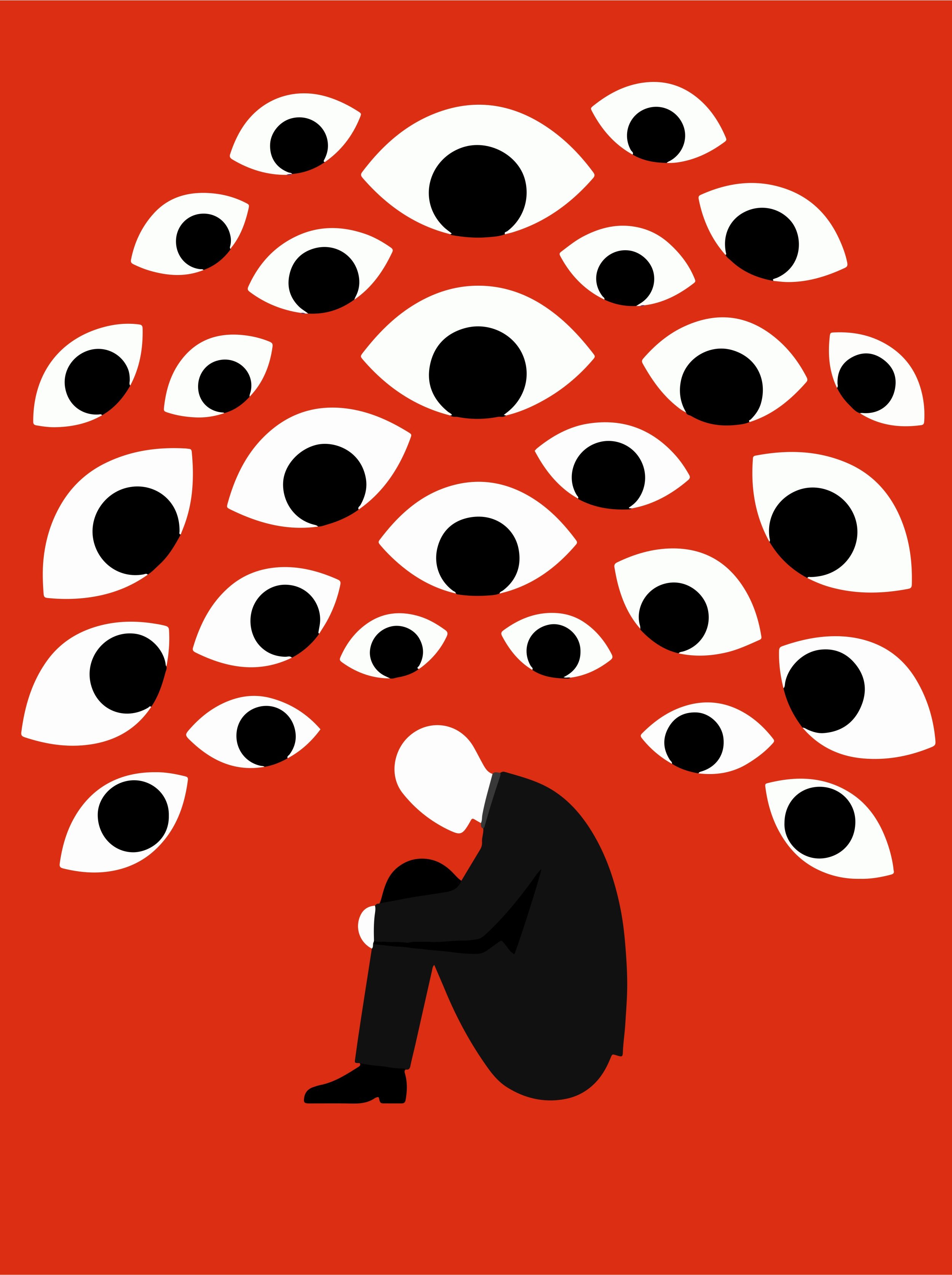
You read about police abuse and police excess and surveillance and all that. It’s one thing to read about it in a book and to theorize about it. It’s different when it happens to you directly, and suddenly it’s not this abstract concept anymore. It’s very concrete. We all knew surveillance was happening. You grew up here with me, so I’m sure in your friends’ groups you also have these conversations about, like, “I wonder who the informant is in our circle?” or, “Who’s the informant in our local masjid?” Right? And you say it in jest, but also not in jest.
And then it turns out there actually was an informant in our friends’ group. That realization for me was an eye-opener that this is very real. There was a binder with my name and my photos in it in that precinct.
Ahmed: That must have felt like a huge violation.
Dandia: Certainly it felt like a major violation. I mean, I didn’t know how to respond. When I saw the confession on my phone, I said my shahada. That was the only way I knew how to respond. I started praying.
People still sometimes write to me saying, “Hey, I need your help. This is happening to me.” Like the FBI knocked on their door. They feel like they don’t know who else to tell, because it’s not stuff to tell everybody, right? You’d be shocked; it’s often people who aren’t even politically activated but for whatever reason they’ve become a subject of interest. I usually give them the contact of CUNY Clear.
I think one reason why I still get calls is because what happened to me ended up being a rare story of triumph. We fought back against the system that targeted us, and we won. And now I have a career for myself.
Ahmed: How would you say that this experience affected the career you’ve built for yourself as a public historian?
Dandia: I think I was able to leverage my experience toward something positive, something uplifting. I remember being really scared at the time of the lawsuit that if we went through with it, I would never be able to get a job. Who would hire somebody who got spied on?
But every single job I’ve had has had one thing in common, and that is service to people. Service to people is what I was doing even before the police thing happened. It’s why I was surveilled. I’m grateful I can say that element of my work has not changed. The type of service has changed, but I think that the concept hasn’t.
I’m a New Yorker, and my professional background is organizing in New York and telling my story, and I came to realize that when we talk about the history of the city and the stories that make up the city, there is so much that we are not talking about that is not being covered. There are about a million Muslims in New York City now. We have a Muslim mayor. We’re central to the story of this city. But the public perception has not yet caught up to that reality. So that was how I realized I wanted to pursue doing public history. So I launched my own storytelling project and walking tour company, and I called it New York Narratives.
When Zohran Mamdani became mayor, a lot of folks from the media reached out to me asking me to basically explain to them how the hell that happened. And I was like, I’ve been talking about it for such a long time, and nobody listened because it was considered too niche, right? And now the entire city is in this fervor. After Zohran’s election, we’re all kind of on a high right now.
Ahmed: The mayor’s decision to keep Jessica Tisch as the commissioner of the NYPD was and continues to be very controversial among progressives. She was previously appointed by Eric Adams and has opposed all kinds of policing and criminal justice reforms. What do you think about his choice to keep her at the helm of the NYPD?
Dandia: The way I understand the logic behind it, in New York City politics, if you want to reform policing, you have to expend the entirety of your political capital on it, which means that you cannot expend it anywhere else. I think Zohran saw that the crime stats were at an all-time low and decided to instead spend his political capital on other things: universal childcare, a rent freeze, free buses.
In some ways, that strategy is working because it has allowed him to retain his popularity. In other ways, I think those tensions are soon going to force a difficult decision because Commissioner Tisch, who is a billionaire heiress, is having meetings and dinners with people like podcaster Sid Rosenberg, who has called Zohran an “America-hating, Jew hating, Radical Islam cockroach.” Tisch has spoken at events where Zohran has been actively maligned, basically undermining him. People notice that, and I know Zohran notices it too. But he wants to navigate that in a way that doesn’t thwart his agenda.
Ahmed: I understand that that’s the political strategy, but as a New Yorker who was victimized by the NYPD, how do you feel about it?
Dandia: It’s hard for me. Zohran is not just my mayor; he’s also my friend. But also his police commissioner was the deputy commissioner for information technology for the NYPD from 2014 to 2019 and played a role in shaping the surveillance program that destroyed our communities. And that’s a tension I’m holding. I don’t know if I can fully process it.
But I trust Mayor Mamdani. I put my trust in him, and I remain critical of the police commissioner, but I keep my trust in the mayor, and I hold that tension within me. If I were to give you a short answer, it’s that I recognize that there’s a complicated patchwork of processes that go into making decisions as the mayor of New York City. We’ll see where it goes.
The mayor’s Office of Community Safety, designed to reduce the role of police in mental health emergencies, is being built out right now, fulfilling a major campaign promise. The office has five staff members, which is very small, but it’s five more than they had about six months ago. So we’ll see how he handles it. We’ll see.