
Each December, Inquest’s team looks forward to sharing with our readers a curated selection from our favorite decarceral books of the year. This year’s roundup is as diverse as ever, with topics ranging from prison book programs and dangerously bad prison food to disability justice and the fight to stop the world’s tallest jail from being built.
This was an exciting year at Inquest: we were a finalist for the National Magazine Award, won a Stillwater Award, and had an essay listed in The Best American Essays 2025. And as our Coeditors-in-Chief recently said: We’re only getting started. Against a backdrop of increasingly totalitarian national politics, every week our articles stand as testament to the power that people can build by working together toward freedom.
As always, if you find value in this work, please consider supporting Inquest with an end-of-year donation and by signing up for our once-a-week newsletter.
This Book Is Free and Yours to Keep
Connie Banta, Kristin DeVault-Juelfs, Destinee Harper, Katy Ryan & Ellen Skirvin, eds.
West Virginia University Press, $26.99 (paperback)
Recommended by Corinne Shanahan, Policy Fellow, Institute to End Mass Incarceration
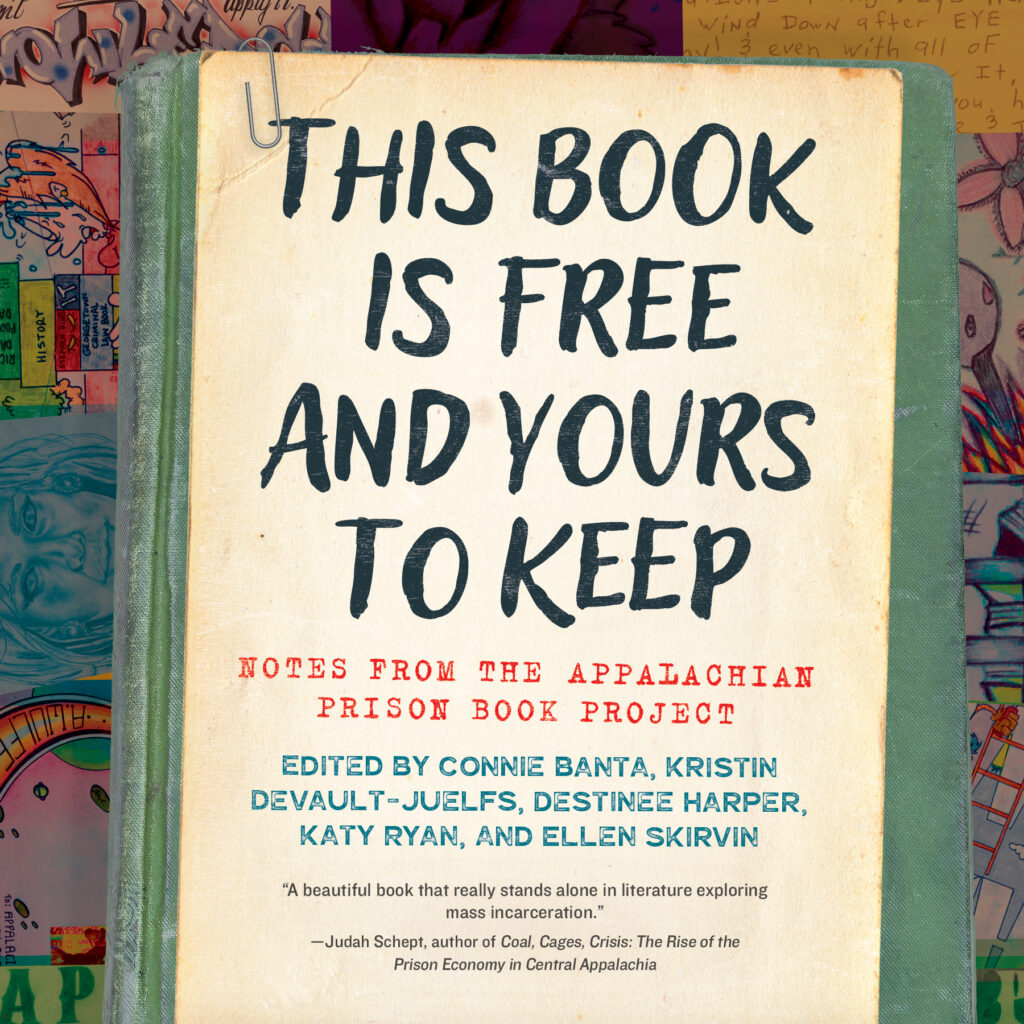
This fall, I started volunteering with the Women’s Prison Book Project (WPBP) here in Minneapolis. Volunteers in the stacks glide around the room, filling requests that come in by letter from women’s prisons across the country. One woman wrote asking only for books about Hollywood. Another sought materials about casting spells inside prison.
These letters were on my mind as I read This Book Is Free and Yours To Keep, which chronicles the experiences of the Appalachian Prison Book Project—a sister of WPBP—and the incarcerated people who receive their books. Like WPBP, Appalachian Prison Book Project receives mountains of requests, each unique, such as: “I was wondering if I could request a book about dreams if that could be possible.”
The book’s contributors make clear: reading is liberatory, especially in prison. As Hugh Williams, Jr., notes in the preface, “Physically, I traverse my world in less than ten strides. Yet, with every book I have the honor to read, I leave this place.”
Prisons don’t like that, and This Book Is Free and Yours to Keep catalogs the ways officials in Appalachia’s violent network of prisons have tightened access to reading over time. And yet, books still find their way in, and people inside still find an escape. This book reveals how.
A read for anyone who has ever loved a book.
Click here to read Inquest’s excerpt from This Books Is Free and Yours to Keep.
The Jailhouse Lawyer
Calvin Duncan & Sophie Cull
Penguin Press, $32 (hardcover)
Recommended by Premal Dharia, Coeditor-in-Chief & Founding Editor
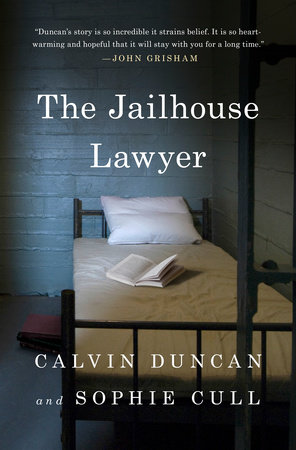
A big part of being a lawyer, especially a public defender, is being a chronicler, a person who sees all the different mosaic pieces of a person’s life and brings them together into a single—often messy—account. I know this from my own experience as a public defender. And I know how often accounts of people’s lives are told through lenses far too narrow. We are all so lucky that Calvin Duncan has chosen legal work as his calling. The Jailhouse Lawyer, written by Duncan and Sophie Cull, is a beautiful window into his gift as a chronicler, a gift that he has deployed for years and, thankfully, will continue to. Duncan and Cull weave together the pieces of Duncan’s life from different perspectives into one harrowing, poignant, and inspiring tale. Wrongfully convicted, Duncan spent twenty-three years in prison in Louisiana. He became a legal expert there, helping countless people navigate the complex web of the system. Now, freed and exonerated, he will continue to do the same. The mosaic pieces offered in this book allow us to see Duncan and his story from different angles. Indeed, they leave a trail of insights and lessons that, alongside so much more, illustrate the incredible depth of his impact.
Click here to read Inquest’s review of The Jailhouse Lawyer.
A Continuous Struggle: The Revolutionary Life of Martin Sostre
Garrett Felber
AK Press, $32 (hardback)
Recommended by Daniel Fernandez, Consulting Editor
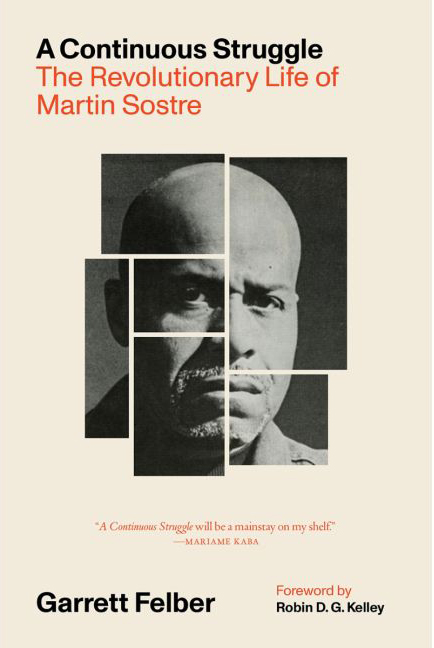
Anti-prison activists have long debated the relationship between litigation and the penal system. The outlines of that dispute are now drably familiar. Critics charge that legal reform is a source of false consciousness and cosmetic change. Reformers defend the rule of law as a universal human good and a powerful tool to protect people from the worst harms of incarceration. Garrett Felber’s biography of revolutionary activist Martin Sostre offers an alternative. While in prison, Sostre worked to organize his fellow captives in the face of repression, published political writing, and made himself into one of the nation’s great jailhouse lawyers. In court, on the yard, and in the world at large, Sostre found ways to engage with the state without legitimizing it. Felber’s portrait of his life and thought is sensitive, rich in detail, and full of lessons for those who continue to struggle with how to transform not just our prisons but the world we share together.
Click here to read Inquest’s conversation about Sostre between Felber and Orisanmi Burtonand click here to review a preview of the book.
Skyscraper Jails: The Abolitionist Fight Against Jail Expansion in New York City
Zhandarka Kurti and Jarrod Shanahan
Haymarket Books, $19.95 (paperback)
Recommended by Joan Steffen, Attorney, Institute to End Mass Incarceration
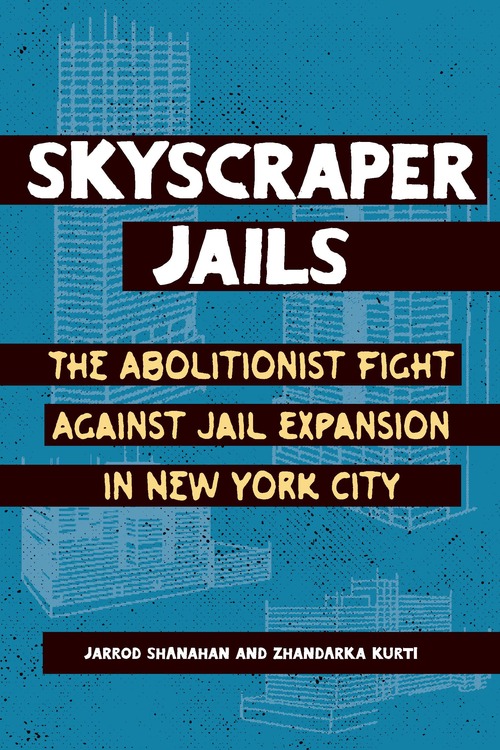
Construction of immigration detention centers, prisons, and other carceral facilities in the United States is once again on the rise. In response, anti-carceral campaigns across the country continue to fight to protect communities from a future shaped by harmful systems of punishment and control. Skyscraper Jails: The Fight Against Jail Expansion in New York City offers a detailed retrospective of one such campaign, the fight to close Rikers and prevent the proliferation of towering new “borough-based” jails in its place. While Skyscraper Jails also provides extensive historical context and Marxian class theory, I related to the book on a very practical level as a participant in the No New Prisons Illinois campaign. Governor Jay Pritzker’s plan to spend $900 million to close and rebuild two state prisons as part of the RISE IDOC (Rehabilitation and Restoration Inside Safe Environments) initiative reeks of the same carceral humanist logic that drove “progressive” support for building New York’s borough-based jails. While advocates should be discerning in how we translate site-specific strategies across carceral construction fights, Shanahan and Kurti’s analysis helped guide the No New Prisons Illinois campaign at its foundational stages as members reflected on their work and organized community teach-ins based on the text. Skyscraper Jails provides a framework for campaigns to cut through the counterinsurgent narrative of carceral humanism, resist cooptation, and develop an alternative vision for community investment. It is recommended reading for any organizer fighting carceral construction in this political moment.
Click here to read Inquest’s excerpt from Skyscraper Jails.
Enemy Feminisms: TERFs, Policewomen, and Girlbosses Against Liberation
Sophie Lewis
Haymarket Books, $22.95 (paperback)
Recommended by Romaissaa Benzizoune, Assistant Editor
Sophie Lewis’s Enemy Feminisms poses a crucial question: How does feminism shed idealism to grapple with the fact that women are as capable as men of committing immense harm? By highlighting historical and present-day examples of oppressive feminist factions—fundamentally racist abolitionists, cross-burning Klanswomen, baton-wielding policewomen, and anti-abortion TERFs—Lewis challenges the longstanding myth that women are innocent victims of history, only recently liberated from generations of imperial, structural, and patriarchal harm. By arguing that women have at times been central to the oppressive carceral state, helping to uphold and even run it (Kristi Noem and Pam Bondi being only among the most recent examples), she contends that women who commit harm are not, viral tweets about women’s harms notwithstanding, to be turned a blind eye to. In fact, they are enemy feminists. White supremacist feminists have historically only supported “the highest type of womanhood”—in other words, women who were white, Protestant, and mothers. Similarly, Lewis encourages us to cleave “enemy feminists” from the rest of the movement, and to move forward with clear-eyed honesty about the liberatory work ahead. Lewis is unafraid to challenge the half‑truths, lies, and assumptions that uphold patriarchal, carceral, and exclusionary structures—see her previous books, Full Surrogacy Now: Feminism Against Family (2019) and Abolish the Family: A Manifesto for Care and Liberation (2022)—and her most recent work is no exception. Her voice is, as usual, distinctive, poetic, and rupturing, slicing through conventional thinking to reveal uncomfortable truths.
Click here to read Inquest’s conversation about Enemy Feminisms between Lewis and Aya Gruber.
How to Be Disabled in a Pandemic
Mara Mills, Harris Kornstein, Faye Ginsburg & Rayna Rapp, eds.
NYU Press, $30 (paperback)
Recommended by Adam McGee, Managing Editor
The COVID-19 pandemic continues to be a disability crisis, generating new illness even as it exacerbates preexisting conditions and wages death disproportionately on disabled people, the elderly, and the most marginalized. How to Be Disabled in a Pandemic helps readers to understand how COVID-19 is also an incarceration crisis, concentrating its miseries in carceral spaces and triggering a cascade of social changes that have, among other things, reversed deinstitutionalization, made incarceration yet crueler, and trapped a growing number of chronically ill people in their homes—house arrest via neglect. Focused on how the pandemic unfolded in New York City, the volume recasts New York as a city organized from its earliest days around its carceral spaces—in Ed Yong’s description, “an archipelago” in which “smaller islands . . . were largely delegated [to] infrastructures of confinement”: spaces of incarceration, immigration control, involuntary commitment, orphanages, and inaccessible graves for society’s cast-offs. How to Be Disabled in a Pandemic models a central tenet of disability justice, “nothing about us without us,” centering how disabled New Yorkers struggled through the pandemic while fighting for a world free of prisons, cops, and futures foreclosed by the unequal distribution of health.
Click here to read Inquest’s excerpt from How to Be Disabled in a Pandemic.
Legal Plunder: The Predatory Dimensions of Criminal Justice
Joshua Page & Joe Soss
University of Chicago Press, $26 (paperback)
Recommended by Adam McGee, Managing Editor
In Legal Plunder, Joshua Page and Joe Soss (sociology colleagues at the University of Minnesota) argue that mass incarceration grew up alongside an equally significant but less theorized shift in how the U.S. state relates to its citizens. Namely, under the aegis of neoliberalism, the state shifted from a paradigm of care to a paradigm of predation. Rather than accepting a fundamental responsibility for Americans’ well-being, the state increasingly seeks to extract value. In their words, “Since the mid-1980s, government and business interests have retrofitted criminal legal institutions so that they function as generators of revenue.” As they go on to explain, mass incarceration became central to this shift as an infernal innovation that offered a way to extract money, significantly, even from those who definitionally lack it: the poor. At a moment when the state is seized by totalitarian urges and each day seems to reach a new nadir of rapaciousness, Page and Soss’s use of a blunt term—“predatory”—to describe what makes incarceration useful to the state feels both innovative and refreshingly frank.
Click here to read Inquest’s excerpt from Legal Plunder.
The Prison Industry: How It Works and Who Profits
Bianca Tylek & Worth Rises
The New Press, $20.99 (paperback)
Recommended by Andrew Crespo, Coeditor-in-Chief & Founding Editor
If you averaged all the new prisons and jails built in the United States between 1984 and 2005, the two decades at the heart of the U.S. prison boom, you would see a new prison or jail being constructed every 8.5 days. With that staggering statistic, Bianca Tylek and the team at Worth Rises open their book, The Prison Industry, by putting front and center an essential fact about U.S. mass incarceration: prisons and jails are big business. Today, just one of these new facilities—such as the latest new federal prison project, slated for construction in Letcher County, Kentucky—can cost half a billion dollars to build. Communities across the country are pushing back against these projects, organizing with neighbors far and wide to demand investment in authentic community health and safety, free from toxic prisons that enrich extractors at the expense of human lives. Tylek is one of the country’s leading voices when it comes to explaining the business model of mass incarceration. In this book, she and Worth Rises offer the movement to end mass incarceration a critically helpful tool to help best understand the opposition.
Click here to read Inquest’s excerpt from The Prison Industry.
Image: Rachel Son / Unsplash