This article is a copublication with Prism (a fellow founding member of the Movement Media Alliance) and Mainline.
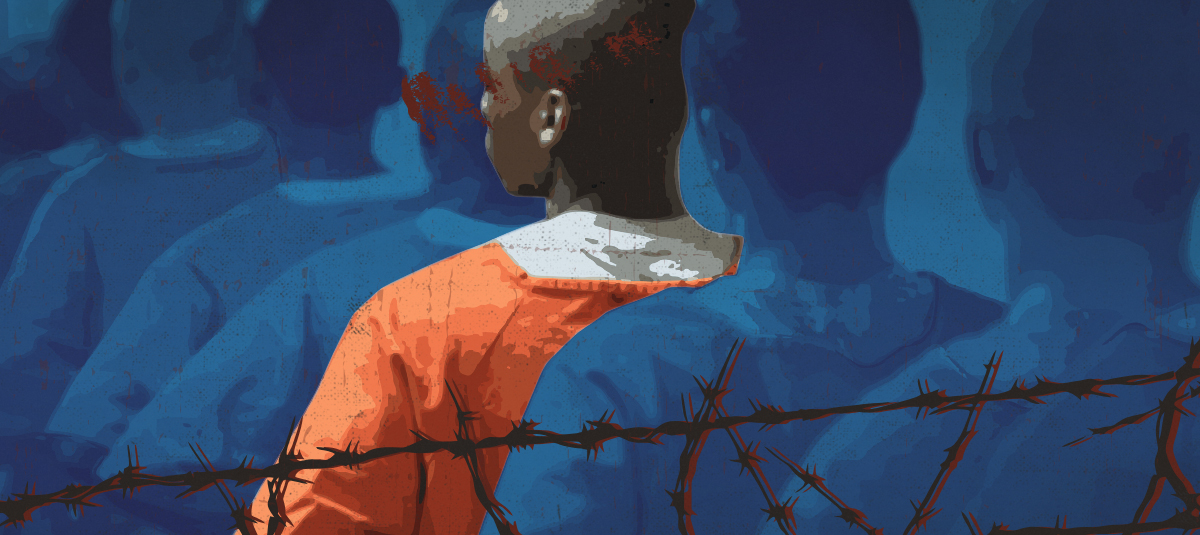
Jay was placed in Georgia’s Metro Regional Youth Detention Center (RYDC) in August 2023 when he was seventeen years old. According to the family’s attorney, the judge presiding over the case sent Jay into detention, despite him qualifying for a commitment alternative program (CAP) that would have prevented his incarceration as a juvenile. It was in detention, the family alleges, that the teenager was beaten up by several other boys incarcerated in the facility.
“When I was trying as a mother to get my son help, they took my rights away from me for that,” said Jay’s mother, speaking of the judge’s decision to ignore the CAP recommendation. “And they’ve done nothing but put him in a more dangerous situation.”
Jay, who is using a pseudonym due to fear of worse treatment, has since been moved to Rockdale RYDC. But he still remembers what it was like at Metro RYDC.
“The environment there is not good at all,” he said. “It’s very dangerous—people fighting 24/7, people trying to make shanks and stuff like that.”
One day, after he had been there for eight months, Jay said the guards cleared one group to move about the facility, but mistakenly let two other units out into the same space. It was during this time that he was reportedly attacked and seriously injured.
“I was jumped by a group of people [from another unit], and my jaw got ruptured,” he explained. His mother added that he still suffers from the injury.
According to the family, a doctor at Metro RYDC conducted an exam following the incident, but claimed nothing was wrong, despite Jay saying he was in extreme pain and that he couldn’t eat. His mother said she was not notified that her son had been injured until much later in the day. Jay said he was first transported to the Children’s Hospital of Atlanta before being taken to Grady Memorial Hospital, where doctors determined he had a broken jaw and needed surgery to implant four screws and a full bottom plate.
Although the family’s lawyer has submitted numerous complaints to the Georgia Department of Juvenile Justice (DJJ), no one has been held accountable for Jay’s injuries. His mother said her son has not been the same since entering the system.
“He still has mental problems,” she explained. “Now you’ve doubled that, because [after] getting jumped by multiple young men . . . I don’t think too many people can really come back from that. I look at my son now, and he’s not the same person. I see a lot of fear [and] hurt in him.”
Jay’s experience is not an isolated incident—rather, it serves as an example of the pattern of abuse in Georgia’s youth detention facilities.
In January 2024 Georgia senator Jon Ossoff, former chair of the now-defunct U.S. Senate Human Rights Subcommittee, launched an investigation into youth abuse in juvenile detention facilities in Georgia and across the United States. The senator called for greater federal oversight of juvenile detention centers to prevent abuse and improve facility conditions. In his letter to the U.S. Government Accountability Office, Ossoff cited 3,400 physical assaults and 150 sexual assaults of young people in Georgia Youth Development Campuses (YDCs) between 2015 and 2018, resulting from dangerous conditions within these facilities for detainees, corrections officers, and other staff.
The DJJ oversees all criminal cases for children under the age of twenty-one and runs the state’s youth detention centers. There are currently nineteen RYDCs and six YDCs operating in Georgia. According to the 2024 DJJ annual report, RYDCs temporarily hold youth who are charged with offenses or are awaiting placement in a different facility, while YDCs hold youth who are in DJJ custody and long-term programs. The report also states that youth typically stay in RYDCs for three days to three months and in YDCs for one to three years, with nearly 80 percent of incarcerated youth in RYDCs. Despite Ossoff’s investigation, Georgia’s youth legal system continues to mistreat and fail to protect incarcerated children, disproportionately affecting Black families.
More from our decarceral brainstorm
Inquest—finalist for the 2025 National Magazine Award for General Excellence & cited in The Best American Essays 2025—brings you insights from the people working to create a world without mass incarceration.
Sign up for our newsletter to get the latest in your inbox every Saturday.
Newsletter
I spoke with another family with a son whose experience mirrored Jay’s. Dom’s mother described how in August 2024, when her son was fourteen, he was injured by another incarcerated young person and a guard at DeKalb RYDC. Dom, a pseudonym because the family feared possible retaliation, was incarcerated at the facility in September 2024 and has remained there awaiting his disposition hearing, where a judge will determine his sentence. According to the family’s attorney, the judge for his case has been switched three times during this period, with court employees citing judges’ busy schedules and vacations.
“He was jumped by four boys and had his hand broken by one of the guards, which he did not get proper medical treatment for,” Dom’s mother said. “They did X-rays, and they did see that it was broken. He was not put in a proper cast. He still complains about his hand to this day.”
Dom’s mother has filed multiple complaints on behalf of her son about the abuse and negligence that he has suffered while in custody, including to the office of Georgia’s governor. The general counsel from Georgia’s Office of Legal Services responded and acknowledged the complaint, but no action has been taken, and the case remains under investigation. Meanwhile, Dom has been moved to another RYDC facility after his mother requested the move for his safety.
These types of issues have persisted in the Georgia juvenile system for nearly thirty years. In 1997 then-acting assistant U.S. attorney general Bill Lann Lee, who was in charge of the Department of Justice’s (DOJ) Civil Rights Division, helped oversee an investigation of Georgia juvenile state facilities that identified several violations of federal youth rights, including overcrowding and unsafe conditions, physical abuse by staff, abusive treatment of mentally ill children, and inadequate medical care. Twenty-one years later, in 2018, a DOJ investigation found that Macon YDC, the state’s only long-term facility for girls, had one of the worst records of youth reporting sexual victimization in the United States. In 2012 another DOJ report similarly found Georgia juvenile facilities to have some of the highest rates of sexual abuse reports in the country, resulting in the suspension of twenty DJJ investigators that same month. The next year, the Atlanta Journal-Constitution conducted a yearlong investigation that revealed the DJJ’s failure to address the physical and sexual assault of juveniles between 2015 and 2018. Senator Ossoff cited these same findings in his aforementioned investigation.
Despite this extensive reporting and investigating, the same pattern of abuse continued. In 2022 the Atlanta Journal-Constitution reported that three teenagers died within weeks of each other in youth detention centers, with two of the deaths resulting from fights that officers overseeing the youth allowed to happen. In 2023 a Georgia Department of Audits and Accounts audit found that children in facilities were held in isolation for increasingly longer periods of time and that incidents of abuse among children and staff were not always reported to the DJJ. To this day, abuse and poor conditions in youth detention centers remain part of the larger problem of constitutional abuses in the state’s justice system overall.
Kathryn Hamoudah, the communications director at the Southern Center for Human Rights, explained in an email how the youth and adult incarceration crises are connected.
“We know that for many kids, involvement in the criminal legal system overlaps with other kinds of ‘systems’ involvement, such as the child welfare system,” Hamoudah wrote. “Under current law, 13-17-year-old kids are charged as adults in superior court, and not juvenile court, if they are charged with any of 10 designated offenses, referred to in Georgia as ‘SB 440 cases.’”
According to the Prison Policy Initiative’s report titled “Mass Incarceration: The Whole Pie 2025,” over 38 percent of people in state prisons were first arrested before they turned sixteen.
In addition to a worsening adult incarceration crisis in Georgia—where the rate of imprisonment has nearly tripled between 1978 and 2022—youth incarceration in Georgia is also at a breaking point. While the state’s budget for incarceration facilities continues to increase annually, this is accompanied by a decrease in the number of beds, according to the Southern Poverty Law Center’s (SPLC) 2024 report “Only Young Once: Dismantling Georgia’s Punitive Youth Incarceration System.” According to SPLC, this leads to overcrowding, which causes increased use of solitary confinement, instances of abuse and neglect, violence, and increased recidivism rates.
SPLC’s report also found that all state youth detention centers have become more crowded since 2021, with total bed capacity decreasing from 1,800 to 1,358 beds in 2023. Meanwhile the average daily population has increased from 926 in 2021 to 1,051 in 2023.
SPLC’s research also shows that Black youth are disproportionately charged and sentenced as offenders in various points of Georgia’s youth legal system, ranging from roughly 61 percent to 69 percent, despite making up only 35.5 percent of Georgia’s youth population. For example, Black children account for 69 percent of the long-term incarceration post-trial population, while white children account for 22.6 percent.
Even though national youth detention rates have declined by almost 75 percent between 2000 and 2023, Black and Indigenous youth continue to be placed in youth detention facilities at highly disproportionate rates since 1997, according to the National Center for Juvenile Justice. In Georgia specifically, nearly 73 percent of the incarcerated youth population is Black compared to the nearly 35 percent Black youth population, according to 2023 data from the Census of Juveniles in Residential Placement. While boys make up the majority of the incarcerated youth population, girls face particular risks of sexual abuse at the hands of male juvenile correctional officers. Indigenous girls are incarcerated at over four times the rate of white girls, and Black girls are incarcerated at over three times the rate of white girls, according to The Sentencing Project’s analysis of data from the National Center for Juvenile Justice.
Moreover, the DJJ reports that a significant portions of youth held in RYDCs have been diagnosed with mental health conditions. In 2024 the department diagnosed 70 percent of incarcerated youth with “disruptive, impulse-control, and conduct disorders” and 56 percent with substance-related and addictive disorders. Despite the high number of youth needing mental health treatment, the Georgia DJJ has been ill-equipped to address them, with only 13 percent of Georgia’s $307 million DJJ budget for fiscal year 2013 allocated toward community-based juvenile detention alternative programs and only 2 percent going toward intensive at-home therapeutic programs. The fiscal year 2025 DJJ budget has ballooned to $394 million.
A report by The Sentencing Project found that inadequate mental health resources and abusive facility environments only worsen existing mental health conditions in incarcerated youth. The preventable death of sixteen-year-old Alexis Marie Sluder in 2022, according to a statement by the family’s attorney, highlights another tragic example of harm under the DJJ. After conducting a mental health screening which indicated that Sluder had taken methamphetamines that day and had serious mental health issues that required treatment, correctional employees placed her in Elbert Shaw RYDC, rather than seeking medical attention, according to the Sluder family’s July 2024 civil lawsuit. Officers “physically watched Alexis Sluder convulse, writhe in pain, sweat profusely, breathe heavily, and cry for over four hours, but chose not to transport her to a medical facility, call an emergency medical service like 9-1-1, nor take any other reasonable measures to provide her access to necessary medical services,” according to the lawsuit. Five DJJ employees were indicted for Sluder’s death on Aug. 28, 2023.
According to SPLC’s “Only Young Once” report, as of 2023 Georgia spends $217,517 annually to incarcerate a child in its system, only to produce a three-year recidivism rate of 35.1 percent. This amount is over eight times more than what the state spends annually on incarceration for an adult, which is $26,933. Additionally, the annual DJJ budget has risen over the past decade, ballooning over $60 million between 2013 and 2024. Over 98 percent of the DJJ’s total budget comes from state funding and taxpayer dollars. Compared to the state’s public education budget, Georgia and its taxpayers pay over thirteen times more for the annual incarceration of a child than the annual cost of a pupil in Georgia public schools in fiscal year 2024, which is $15,833.
“The cost to enroll that kid into the University of Georgia or to fund the K-12 public school education for that child is dwarfed by the cost of incarceration,” SPLC senior policy analyst Delvin Davis, author of the “Only Young Once” report, explained. (In SPLC’s research, the term “youth” applies to children ages ten to seventeen.) “There are some nonprofits that are doing some good work as far as providing counseling and after-school assistance . . . but those are all piecemeal attempts to provide an alternative to incarceration through community. That hasn’t been a statewide priority the same way incarceration has.”
Despite the fact that youth detention receives increased resources, along with claims that youth detention services decrease crime and hold “youthful offenders accountable,” experts argue that youth incarceration does not actually address root causes of criminal offenses. Research indicates that Georgia YDC programs are associated with higher risk of juvenile recidivism or repeat offenses. Data on incarcerated youth in Georgia shows that those who are incarcerated as children are more likely to be reincarcerated as adults, making them “repeat offenders” to the state.
“Once you put a kid into the carceral system, there’s a recidivism rate that’s about 35 percent of kids within a three-year time span,” said Davis. “Once they do get out, they return to the system within three years. So we look at the effectiveness of the crossroad system—you’re paying a lot of money for something that doesn’t really keep kids out.”
Organizations such as Community Connections for Youth, the Campaign for the Fair Sentencing of Youth, the Coalition for Juvenile Justice, and No Kids in Prison have been fighting for restorative justice, therapy-based programs, and youth decarceration to create interventions and prevent youth from entering the juvenile justice system.
When asked about proposed solutions for the juvenile justice system, Terrica Redfield Ganzy from the Southern Center for Human Rights suggested decarceration. She explained:
It is very clear from the crisis in the prison system that our state has an over-incarceration problem. Georgia could reduce reincarceration by reducing or eliminating reincarceration for technical violations of parole. The bloated prison system is taking away funding from services that prevent crime, such as housing security, mental health support, employment opportunities, quality education, etc.
Ganzy also mentioned the need for greater transparency and accountability. “Prison officials have become increasingly secretive about what is going on inside prison walls, eliminating monthly reports, press releases regarding deaths,” she explained. “Without more transparency, accountability is limited, and people who are incarcerated will continue to suffer in the dark.”
The parents I interviewed emphasized the need for alternatives to harsh punishments. “I want people to know exactly how they treat our young youth. I’m not saying that our youth are, you know, perfect, but they’re there serving their time,” Jay’s mother said, “A lot of them need help. A lot of them want help, but don’t know how to ask for it because they haven’t been taught it or seen it.”
When asked what she wanted to see happen differently, she described a desire for more humanity and compassion.
“I mainly just want the state, I want the jails . . . to know as parents, we see, we feel too,” she said. “We understand that, yes, if they do wrong, it’s consequences.”
But, she said, consequences don’t have to take the form of extreme punishment or consignment to a dangerous facility. It can instead mean helping.
“Put them in the right place, instead of just throwing away the key.”
Editors’ Note: “DJJ is committed to ensuring the safety and security of the young people in our care,” Glenn Allen, director of communications for the DJJ, wrote in an email statement after this story was published. The email continued, “We hold both the youth and staff members accountable for any conduct that violates departmental standards and address inappropriate behavior in accordance with established policies and practices.”
Image: Rikki Li, Prism