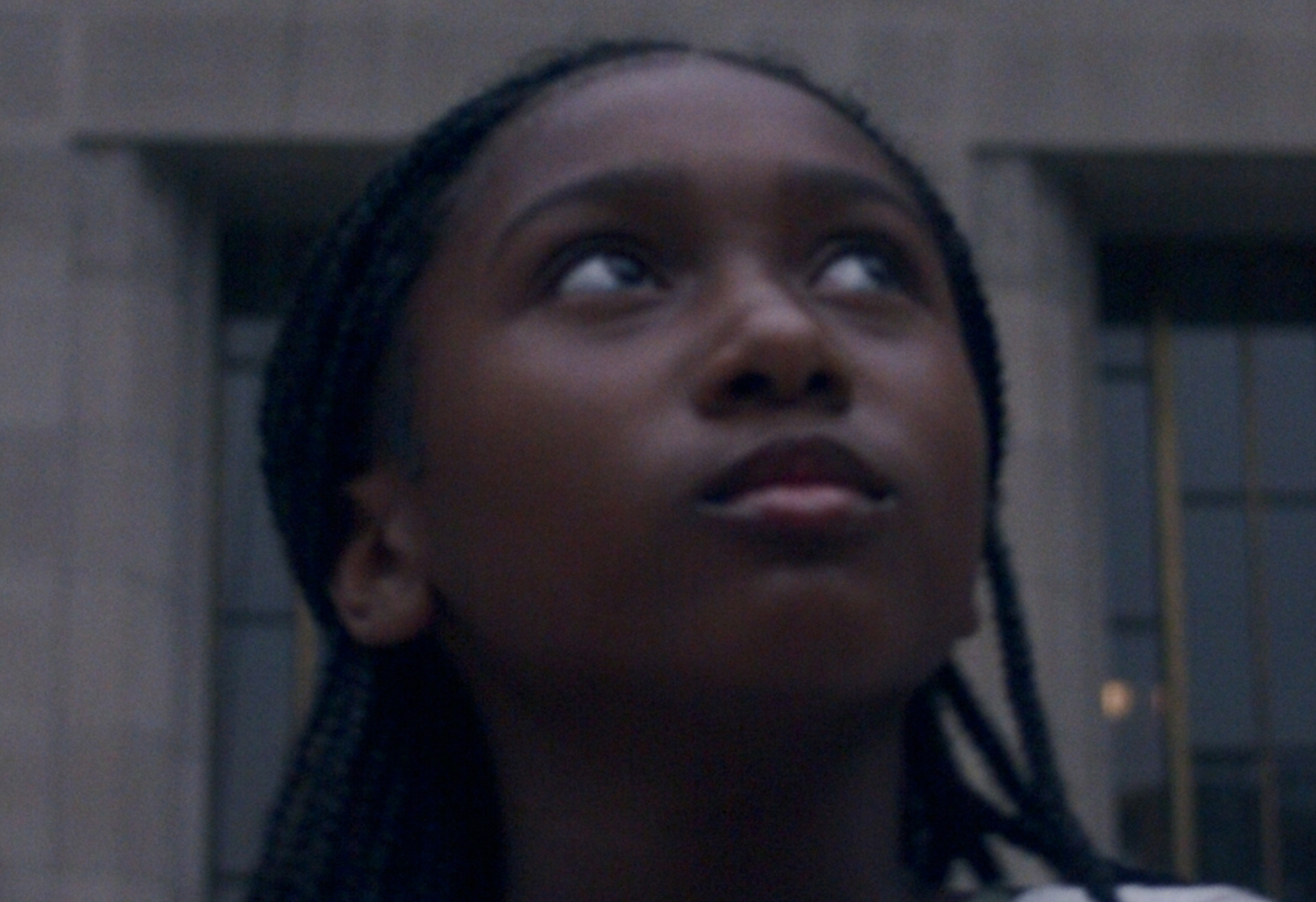
Most stories about incarceration are told by people who have never experienced it. This has created a visual culture that is skewed, at best, and which often helps to spread harmful stereotypes about the people shut up inside of our nation’s prisons.
Represent Justice is helping to light a different path. Existing at the intersection between film and decarceral advocacy, the nonprofit works on two fronts.
First, it runs impact campaigns for high-profile decarceral films such as The Alabama Solution. In this capacity, Represent Justice will be working closely this year with my colleagues at the Institute to End Mass Incarceration, whose Exposing Prisons Project is integral to this campaign as well.
Second, through its Ambassadors Program, every year it trains a new cohort of formerly incarcerated people to make short films sharing their own stories from their own perspectives. Thanks to this programs, Represent Justice is home to an ever-growing archive of films by formerly incarcerated people. And starting this week, in a new just-announced partnership, five of Represent Justice’s films will become available on the free streaming service Tubi, bringing these critical perspectives to a large audience of people who might otherwise never seek them out.
In the following conversation, I spoke with Represent Justice’s CEO Daniel Forkkio about the organization’s work, the current cohort of Ambassadors, and the difference it makes when formerly incarcerated people are centered in advocacy work.
Adam McGee
Managing Editor, Inquest
Adam McGee: Please start us off with a high-level overview of Represent Justice. How do you describe the work the organization is doing? And do you have different ways of pitching the organization depending on whether you’re talking to people who love film or people who work on ending mass incarceration but maybe aren’t particularly into film?
Daniel Forkkio: Over the years, I’ve learned to simplify it greatly. Narrative work is understood in so many different ways by so many different people—or not at all. In simple terms, Represent Justice helps formerly incarcerated people share their voices and their experiences with communities around the country by training, supporting, and compensating impacted storytellers and by running campaigns to change the justice system.
I don’t change the core explanation much based on the audience, but I will emphasize different things depending on who I’m talking to. For someone who doesn’t naturally care about or organize around changing the justice system, I remind them that justice is broadly defined. Stories of justice and injustice don’t have to be about policing or prisons. They’re often about everyday societal failures and broader stories of inequality that they can easily recognize among their own family and friends.
When I’m talking to people who are more deeply steeped in the advocacy or legislative side, I remind them that storytelling can also heal on an individual level. Sometimes self-expression needs to be the priority, even more than a specific policy or legislative outcome. Narrative work, cultural change, individual healing—all of that is part of transforming the system.
At the center of our work, what we do is help formerly incarcerated people share their stories and experiences. We produce films and run impact campaigns to get people to see things differently and take action.
More from our decarceral brainstorm
Inquest—finalist for the 2025 National Magazine Award for General Excellence & cited in The Best American Essays 2025—brings you insights from the people working to create a world without mass incarceration.
Sign up for our newsletter to get the latest in your inbox every Saturday.
Newsletter
AM: What do you think makes film special? Why, in this broader world of narrative-change work, has Represent Justice chosen to focus its mission on film?
DF: I believe in all forms of storytelling. Personal healing and transformation can happen in many media. But what I like about film—why we focus on it—is that digital visual storytelling has a way of reaching mass audiences quicker and faster.
Sharing your story can carry an emotional cost. Because of that, it’s important that the story reaches the highest number of people, in large clusters, as quickly as possible. Film can do that.
I also think visual storytelling is more subversive mentally. It immerses you. Sometimes explicitly explained concepts are hard to accept, but when you’re emoting or reacting to something you’re watching unfold, the reconciliation of the narrative becomes internal—your inner voice interprets what you’re seeing. That’s a more effective way of changing minds.
Our theory of change centers what is called narrative transportation theory. Basically, when stories are told really well, people become immersed. Their guard lowers, and their capacity to empathize rises dramatically. That’s incredibly powerful for advocacy and for changing society, and it’s something that film does uniquely well.
AM: You wrote an op-ed last summer during a moment when public media was under threat of being defunded by the federal government (and eventually was, sadly) in which you argued for PBS as a public good. Represent Justice prioritizes making films freely available online, but the film world is often in various ways focused on profit and restricting access. For example, certain kinds of film distribution are often embargoed to preserve a film’s eligibility for festivals or awards. How have you navigated conversations about not restricting access within your industry?
DF: That’s a great question. We have a deep belief in narrative infrastructure—and the best forms of infrastructure are publicly funded and publicly accessible.
The storytelling industry—let’s call it Hollywood, just for shorthand—can be extractive. It can reinforce biases or misinformation. It often relies on what’s called the danger of the single story—stories of single heroic events rather than systemic crises. That makes it harder for people to accurately see the world around them.
So I think authentic stories have to be accessible and as prevalent as the harmful or misleading ones. And the only way to do that is to be strategic about how we release stories.
At Represent Justice, it’s important to us that stories be accessible. We put them online. We put them on YouTube. We put ads behind them. If certain folks can’t see them, we go into prisons to connect with people inside. We’ve done that for years.
But it’s not just making stories accessible—it’s partnering with advocates and community screening hosts. Even when we sometimes work on the distribution or impact campaign for a feature film that’s going to be on a major streaming service or in theaters, we can bring a reliable network of people who care about the story and will contribute to a groundswell of attention.
We have 1,100 screening hosts around the country—colleges, universities, churches, community centers. So when we’re producing our own stories, we make them accessible. And at the same time, we build an alternative distribution pathway that gives us more power.
AM: I’d love for you to introduce our readers to Represent Justice’s Ambassadors Program—who these folks are, what support you give them, and how you teach filmmaking to people who’ve never done it before.
DF: The idea for the Ambassadors Program came out of the Just Mercy impact campaign that ran six years ago. I was part of that campaign, helping build the infrastructure. For that, we had something we called an ambassador program, in which we were pairing people with lived experience with screenings of Just Mercy. We held over 600 screenings. Ambassadors participated in panels afterward and talked about their lived experiences.
What I saw firsthand was that their testimonies were often more powerful and captivating than the major feature film—which had huge production and support behind it. From that, the idea emerged: formerly incarcerated people should have their own films. They should be the main event.
So we created a twelve-month program for formerly incarcerated people in which they receive fully compensated training in narrative power, health and wellness, digital storytelling, media training, impact strategy, and production—followed by six months where we help them produce a short film and run a campaign around it. Initially film wasn’t part of the capstone, but it quickly became clear that it should be.
Production training isn’t actually the hardest part. We partner with great filmmakers who mentor ambassadors through production. The hardest part is the health-and-wellness component—helping people prepare to share their story publicly. Often they have to unravel things they’ve been told about themselves, or things they’ve told themselves. They have to think about backlash, community envy, audience judgment. And they have to ground themselves in what change they want to see and what could have been different for them. That part is incredibly complex and varies widely person to person.
We’re proud of the curriculum. It’s building narrative power. And we use the word “ambassador” very deliberately—they represent themselves, their communities, and the work they’re doing.
Our average ambassador has been home maybe three or four years. They have some essential support in place—housing, employment. We know you can’t put storytelling first without basic needs met.
While some of them have been leaders of organizations, most are not national leaders. Many aren’t working in state-level organizations. Some volunteer locally or have non-leadership roles. They’re not people you’d recognize if you primarily know the justice movement through legacy media or op-eds. They’re everyday people who’ve had a difficult experience but who believe in using their story to transform the system—and to heal.
AM: Could you introduce us to this most recent class of ambassadors and tell us about the work that some of them are making?
DF: Dena Dickerson is one of our 2025 ambassadors based in Alabama—one of the states with the highest incarceration rates, and a very corrupt correctional system. Her film is called The Trauma We Carry, and it looks at the lack of understanding of adverse childhood experiences in supporting at-risk young people. It also details Dena’s journey of helping others navigate reentry from prison while fighting for justice and reform in the juvenile justice system that fails to address those root causes of childhood pain.
Autumn Mason, who is in Minnesota, created the film Autumn, which draws on her own experience of incarceration, including through interviews with her family and expert insights. Autumn is using her film to make a case for the power of familial connection, and the need to explore alternatives to incarceration to keep families intact. The impact of incarceration on families and caretakers is so relevant right now, as we see so many examples of state-sanctioned detention and punishment tearing families apart.
Marci Marie Ray is based in Texas and has made a film called Whispers Beyond Bars. It details the reality of life in prison for pregnant women, exposing the lack of compassionate care for mothers who are incarcerated. The film gives voice to the systemic and personal trauma of pregnancy behind bars, calling for greater dignity, healthcare and safety for incarcerated women.
AM: The Represent Justice online film archive is extensive! For readers just starting to explore it, do you have a recommendation for where to begin?
DF: Yes. A film called Breaking Barriers. We produced it with an ambassador, Kristel Cosio, who graduated from UC Berkeley and is part of Underground Scholars, a program that helps currently and formerly incarcerated people get their degrees. It’s a deeply uplifting story—hopeful, asset-based. In narrative and political work, we tend to focus on fear, trauma, deficit. Even we struggle with that. Breaking Barriers takes a broad view of what justice looks like and what solutions can look like.
You can earn more about Kristel’s work to spotlight and remove the barriers formerly incarcerated individuals face in accessing higher education by visiting Kristel’s impact campaign page here. Breaking Barriers will also be streaming on Tubi starting this week.
Image: Detail of promotional still from The Trauma We Carry, courtesy of Represent Justice